The Farm
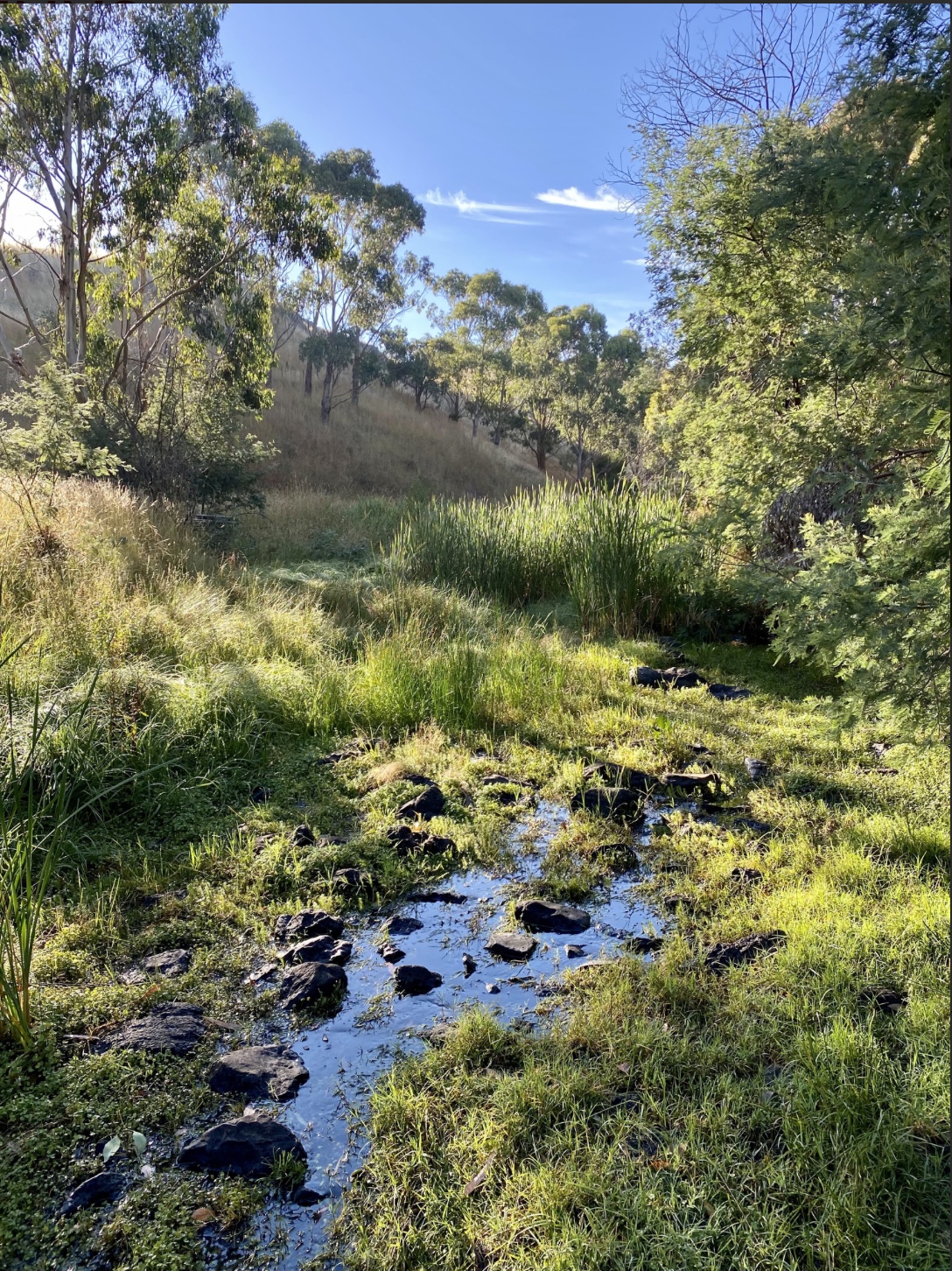
Mirrim Wurnit, the name given to us by the Traditional Owners for Deep Creek in the Woi wurrung language, runs through our 100-acre farm in the Macedon Ranges. We came here with a clear intention: to live well, to give more than we take, and to leave this land in better condition than we found it.
We live on the farm and manage it as a working landscape, integrating regenerative grazing, revegetation and water management to improve soil health, biodiversity and long-term resilience. The property runs off-grid, and its day-to-day operation is guided by clear priorities, measurable outcomes, and partnerships with Traditional Owners, ecologists and regional land-management bodies.
We think of ourselves not as owners but as custodians, temporarily responsible for a piece of country with its own deep history, its own intelligence, and its own needs.
Peter & Kate Munns
Mirrim Wurnit, Deep Creek, has been cared for by the Wurundjeri Woi Wurrung people for tens of thousands of years, and that history shapes how decisions are made here. We hold this as a duty of care: to leave the land in better condition than we inherited it, to hold the long horizon alongside the day-to-day, and to work with Traditional Owners and regional land-management bodies as partners, not stakeholders.
Grazing is run under a holistic, planned framework, with livestock rotated through paddocks in a deliberate pattern that mimics the movement of wild herds. Rest periods are timed to pasture-recovery benchmarks, rebuilding topsoil, sequestering carbon, and restoring the deep-rooted native grasses that once covered this country. It is one pillar of an integrated land-management plan, designed to work alongside revegetation and water management toward the same measurable outcomes.
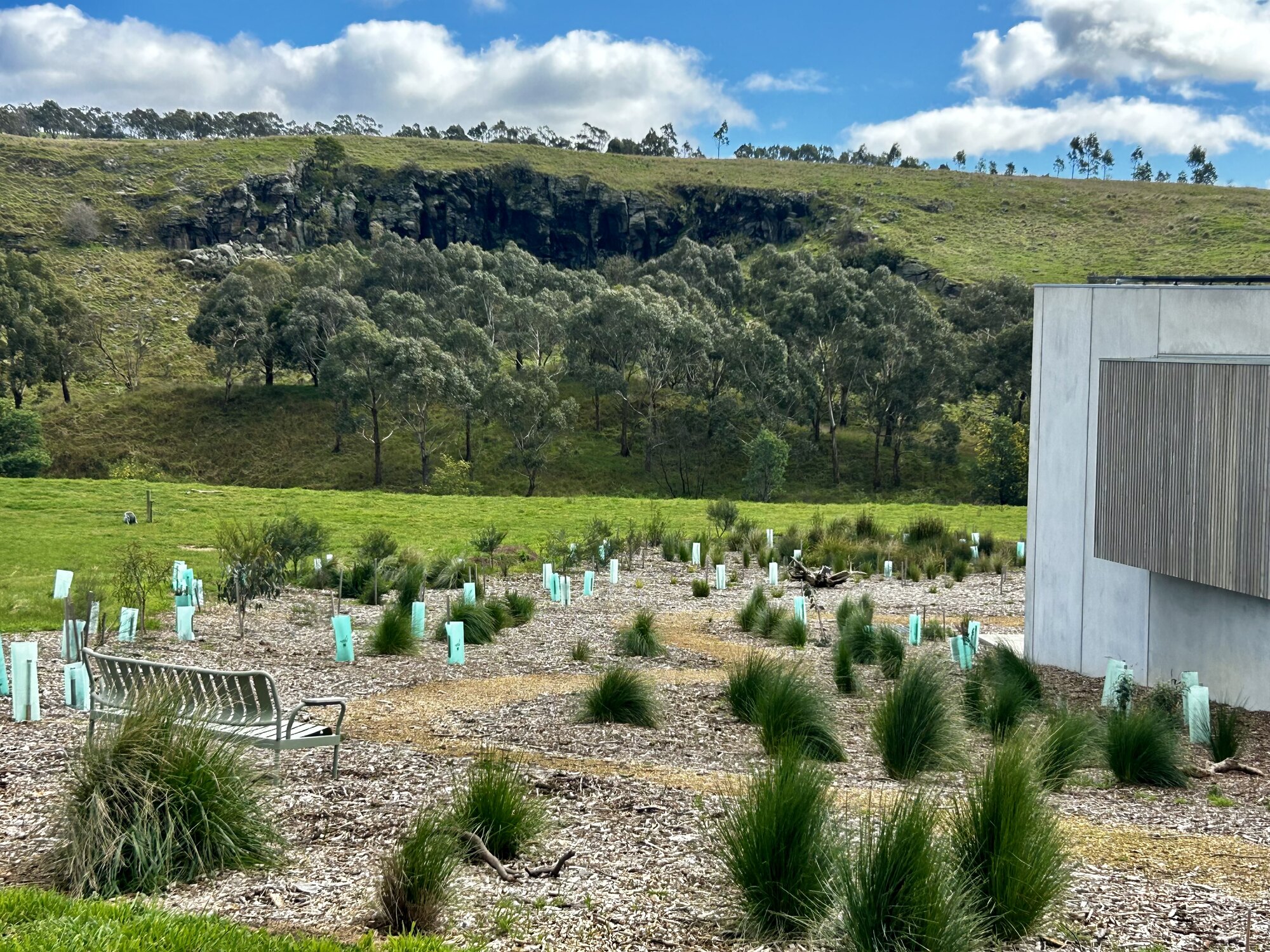
Up to 30% of the property is permanently set aside for revegetation under our Land Management Plan. Thousands of native trees and understorey shrubs endemic to the Macedon Ranges are being established in designated zones, designed as habitat corridors that connect with neighbouring remnant bush and contribute at a catchment scale to the region's broader biodiversity strategy. Five species of conservation significance are identified locally: Grey-crowned Babbler, Bush Stone-curlew, Long-nosed Bandicoot, Squirrel Glider and Brush-tailed Phascogale, and planting is targeted to support their return.
How We Farm
Natural Sequence Farming (NSF) is a framework for understanding how the landscape functioned before human interference, and for actively restoring those functions. It begins with a simple but profound observation: that plants manage water, and water builds everything. Together, they are the engineers of healthy country.
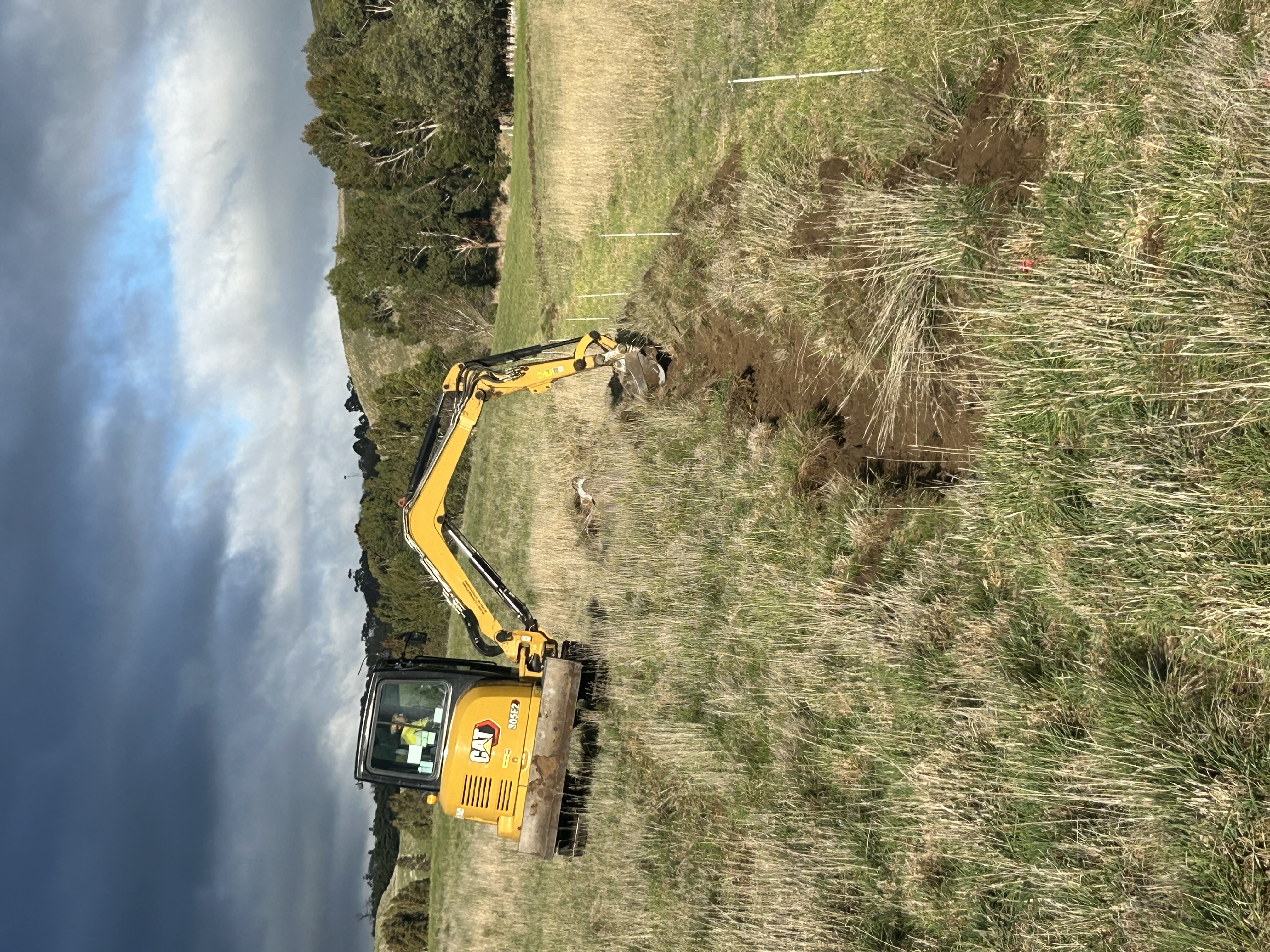
At Mirrim Wurnit, we are putting NSF principles into practice on the ground — currently installing contour banks across the property, placed where water once naturally flowed across the landscape. These earthworks restore that original function, slowing the movement of water down slope and spreading it across the land rather than allowing it to race off into the creek. This rehydrates the soil, reduces erosion, lifts the water table, and begins to rebuild the deep landscape function that once made country like this extraordinarily productive.
Plants are also necessary to support the contours in restoring natural flows of water across the landscape, and the hydrology of the system. We are planting native species along and below the contour banks — their root systems stabilise the earthworks, draw water deeper into the soil profile, and over time take on the biological role that the machinery initiates. Combined with holistic grazing and riparian fencing along Mirrim Wurnit, the contours and their plantings are part of a long-term commitment to landscape restoration, working with the patterns of country rather than against them.
The Five Pillars of Natural Sequence Farming · hover to explore
Contour banks, swales and retained vegetation slow water moving across and through the landscape, above and below ground, giving it time to sink in rather than run away.
Every plant has a role in landscape succession. Nature determines what is needed. We listen before we pull, understanding that so-called weeds are often responding to a landscape in need.
Sensitive areas, such as creek banks, wetlands and newly planted zones, are fenced and rested. Animals are used as tools where beneficial and excluded where the land needs to heal.
Wetlands and floodplains naturally filter water and process fertility before it leaves the landscape. We are working to reinstate these areas along Mirrim Wurnit so nutrients cycle back through the system.
Fertility that accumulates in lower areas must return upslope to close the loop. Grazing management, composting and strategic plantings all help cycle nutrients back up the landscape system.
"One of the best things I've learnt is to manage for what you want, not what you don't want. I apply this to my thinking about weeds, the main one here is Chilean Needle Grass, so rather than spraying poisons and doing mechanical removal, we are letting the pasture revert to more palatable grasses by managing grazing and improving hydrology."
Peter Munns
Want to learn more about Natural Sequence Farming?
Tarwyn Park Training → Forage Farms · NSF explained →Looking Ahead
We are actively learning about indigenous cultural burning to improve our grasslands and foster native species. Practised by First Nations peoples across Australia for tens of thousands of years, it uses low-intensity, carefully managed fire to rejuvenate country, reduce fuel loads, and encourage the regeneration of native grasses and plants. We expect to integrate these practices alongside our regenerative grazing and Natural Sequence Farming work as the partnerships and conditions are right.
How We Graze
Regenerative grazing begins with a single observation that changes everything: livestock, managed well, are not a problem for the land; they are the solution. The key is rhythm. Animals that graze one area and move on, allowing long rest periods before returning, mimic the behaviour of the wild herds that built the world's great grasslands over millions of years.
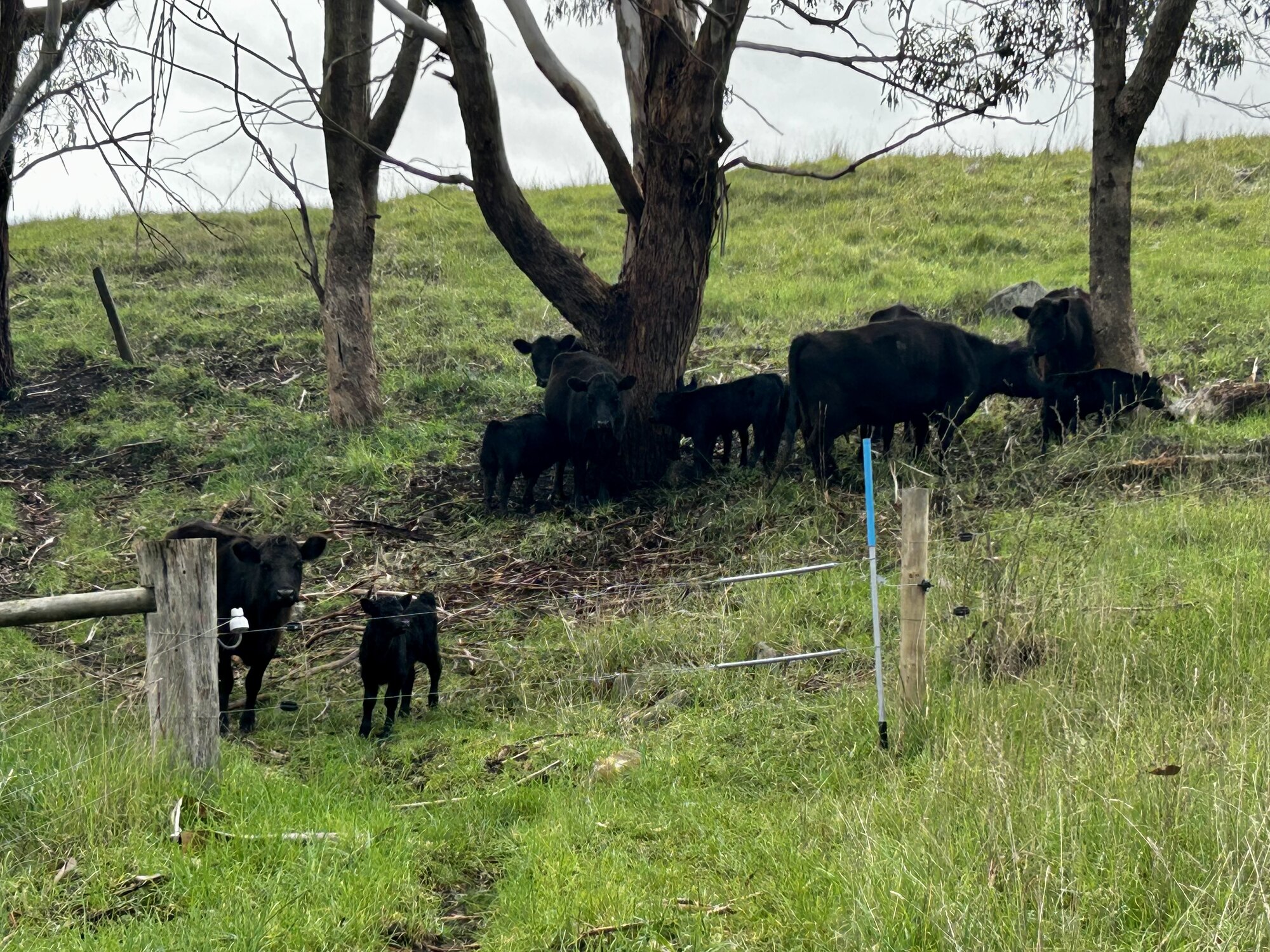
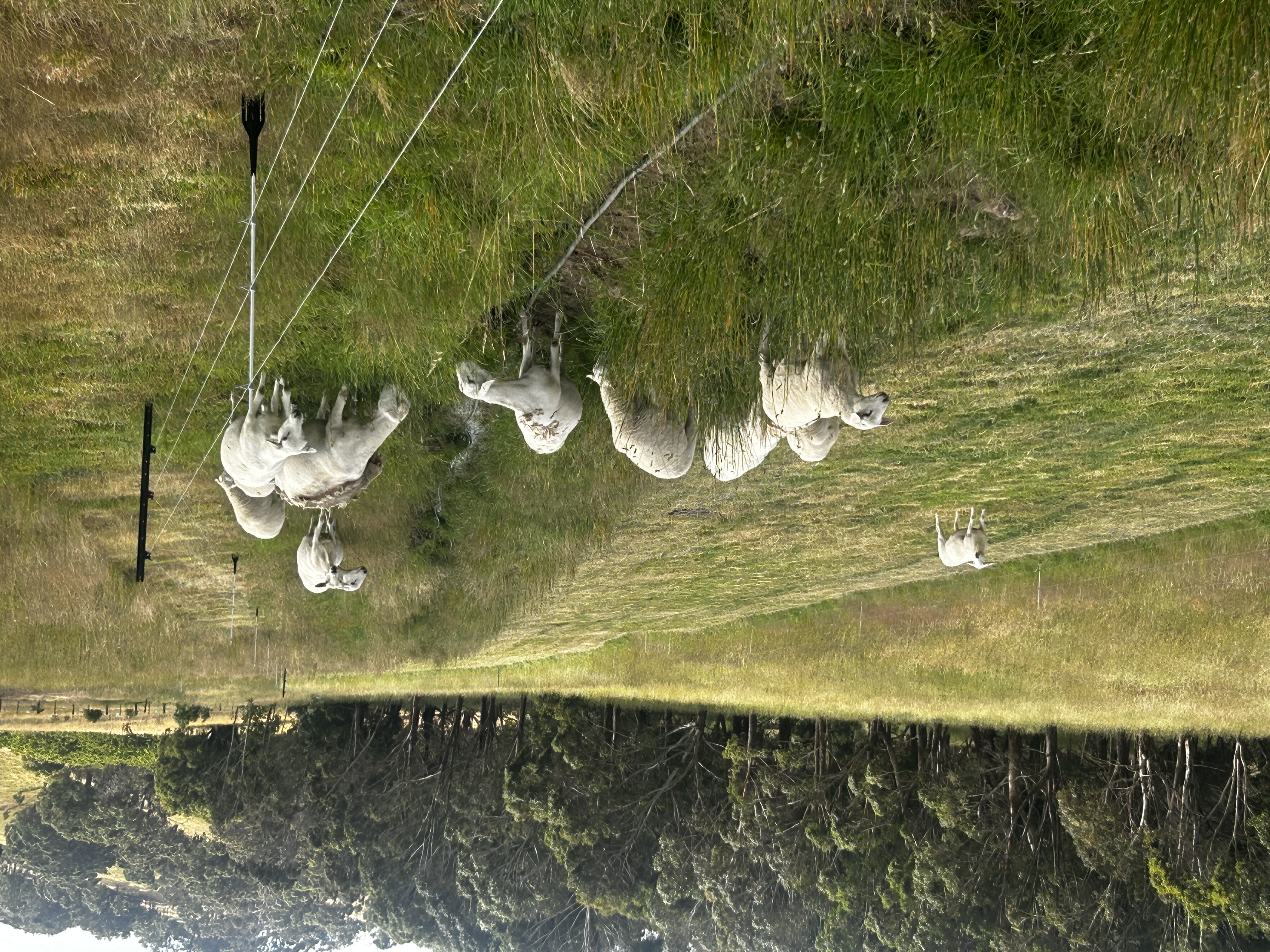
At Mirrim Wurnit, we divide our 60 acres of pasture into multiple paddocks using a combination of semi-permanent and temporary electric fencing, rotating our Dexter/Lowline cattle and Aussie White sheep through them on a planned schedule. Our chickens move with the sheep, following behind to scratch through the manure, break parasite cycles, and forage the insects stirred up in their wake. The alpacas work as guardian animals for both the flock and the chickens, keeping a watchful eye out for foxes and other predators. Each paddock rests for months between grazing events. The grass recovers fully, roots deepen, organic matter builds, and the soil comes alive.
The results show up in the ground: improved water infiltration, more diverse pasture species, reduced erosion, and a steady increase in the sponge-like quality of the soil that makes this landscape more resilient to both drought and flood, exactly what country in the Macedon Ranges needs.
Thinkers & practitioners who have shaped our approach
Savory's Holistic Planned Grazing framework, developed over decades of field observation across Africa and the Americas, demonstrated that large herds of animals, properly managed, can reverse desertification and rebuild grassland soils. His insight that the land needs animal impact, not less of it, is the foundation of everything we do here. savory.global →
The New South Wales farmer who developed Natural Sequence Farming, the practice that underpins our whole approach to land and water at Mirrim Wurnit. Working against the grain of conventional agriculture, Andrews restored degraded catchments by slowing water, rebuilding organic matter and letting landscapes rehydrate themselves. His two books, Back from the Brink and Beyond the Brink, are essential reading for anyone serious about land restoration in the Australian context.
Massy's landmark book Call of the Reed Warbler brought the regenerative agriculture movement to an Australian audience, documenting farmers across the country who had transformed their land through holistic thinking. As both a farmer and a scholar, he gave Australian regenerative agriculture its own voice, and its own deep connection to country. Watch him talk →
Jason McAinch is based at Macedon Ranges Shire Council, and leads the Healthy Landscapes program, a partnership between Macedon Ranges Shire Council, Mount Alexander Shire Council and other regional councils and catchment management authorities. The program works directly with landholders across the region to restore ecological function, improve biodiversity and build more resilient farming systems. Jason's on-ground knowledge of the landscape, and his practical, partnership-based approach, have been invaluable to our work at Mirrim Wurnit. Healthy Landscapes →
Effective rotational grazing depends on being able to move animals quickly and reliably. We use a combination of semi-permanent and temporary electric fencing across our paddocks, giving us the flexibility to adjust cell sizes and timing as conditions change.
Our Animals
Land Use
Not all land should be farmed. We're actively transitioning up to 30 acres, 30% of the property, from farmland into permanent native habitat. The remaining 70 acres is managed holistically: grazed, rested, monitored and adjusted season by season. The property straddles the boundary of two bioregions, the Central Victorian Uplands and the Victorian Volcanic Plain, which accounts for much of the landscape diversity here, from the volcanic rocky escarpments on the hilltops to the rich creek flats below.
Alongside the revegetation work, the banks of Deep Creek itself have been carefully fenced and planted to reduce erosion and shade the water, encouraging the return of platypus, fish and aquatic invertebrates. Access to the paddocks on the far side of the creek will eventually require a ford crossing, designed and built in collaboration with Melbourne Water, a practical reminder that farming around a culturally and ecologically sensitive waterway takes patience and care. Our work here sits within a larger vision for the landscape: we are supporting and consulting with the Biolinks Alliance, whose Deep Creek Biolink project aims to restore ecological connectivity along the creek system and beyond. Although the farm is currently outside the boundary of their project area, our revegetation and corridor-building share the same goals.
"We are the current custodians. The land was here long before us, and will be here long after."Kate Munns
Revegetation & Biodiversity
Our revegetation work, planting thousands of indigenous trees, shrubs and grasses across Mirrim Wurnit, is made possible through partnerships with four outstanding organisations.
Our approach
Every plant we put in the ground is chosen to match the local ecosystem: specifically the three Ecological Vegetation Classes (EVCs) mapped on this property: Plains Grassy Woodland, Stream Bank Shrubland and Herb-rich Foothill Forest. We're not planting generic native species; we're rebuilding the precise plant communities that belong here, with the insects, birds and animals that depend on them. The deep root systems of established native vegetation also play a vital practical role, intercepting and absorbing agricultural runoff, including animal manure, before it reaches Deep Creek and the broader waterway system.
Succession planting
We plant in stages, working with the logic of ecological succession. First come the fast-growing pioneer species: acacias and other native shrubs that establish quickly, fix nitrogen from the air and create shelter for what follows. Into that framework we plant native grasses and forbs. Over time, as conditions improve, we introduce the canopy trees and the mid and understorey species that make up a mature, self-sustaining woodland, giving back to the land something closer to what was here before.
Better farming, not less
Committing 30% of the property to biodiversity isn't a concession; it actively improves the productivity of the remaining 70%. Shelterbelts and windbreaks reduce stock stress and pasture desiccation. Native vegetation on slopes and creek margins holds soil in place and keeps water in the landscape longer. Increased insect diversity supports pollination and natural pest control. Deep-rooted native plantings draw up and cycle nutrients that shallow-rooted pasture grasses can't reach. A biodiverse farm is a more resilient one, better able to handle drought, flood and the pressures of a changing climate in the Macedon Ranges.
Melbourne Water manages the rivers, creeks and waterways of the Port Phillip and Westernport region, including Mirrim Wurnit. Their Stream Frontage Management program supports landholders like us to fence, revegetate and restore the creek banks that protect water quality for all Melburnians.
melbournewater.com.au →Since 1989, TreeProject has been connecting urban volunteers with rural landholders to grow and plant indigenous seedlings across Victoria. Their volunteer growers propagate the local provenance trees and understorey species we need: plants grown by people in their own backyards, specifically for land like ours.
treeproject.org.au →Landcare is Australia's largest community environment movement: a network of more than 100,000 volunteers caring for country at a local level. Our nearest Landcare group provides on-ground knowledge, community connections and practical support for our revegetation and landscape restoration work at the farm.
landcareaustralia.org.au →How We Live
No mains connection, no grid dependency: our entire property runs on sunlight stored in batteries. The system is sized for a working farm, not just a house.
Drinking and household water is collected from our roof and stored in large tanks: up to 120,000 litres behind the garage and 30,000 litres under the house. Deep Creek provides water for the animals and irrigation.
A dedicated solar array by the creek powers a pump that lifts water up to a header tank. Gravity does the rest, sending it through underground pipes to wherever the animals need it across the property. Three fixed concrete troughs serve our main paddocks, but the backbone is a network of Kiwitech movables that clip to taps along the buried pipes — so water follows the flock and herd as they rotate, rather than the other way around.
Very little leaves the property. Green waste is composted on-site; our own septic solution returns treated water to designated paddocks; animal manure and urine cycle straight back into pasture; fallen branches become firewood, with a woodlot planned to replace what we burn. Hay is the one input we still occasionally buy in — but we never send fertility off-farm.