Country & Culture
26,000 years of deep history*
Mirrim Wurnit, Deep Creek, flows within the traditional Country of the Wurundjeri Woi Wurrung people, part of the broader Kulin Nation, whose connection to this landscape spans at least 26,000 years. Colonisation disrupted and destroyed much of that living culture, yet the eastern Macedon Ranges remain rich in cultural significance — Mount Macedon (Geboor), Hanging Rock (Ngannelong), and the Mount William greenstone quarry (Wil-im-ee Moor-ring), whose axe heads were traded across south-east Australia for thousands of years. Their descendants are active in this country today.
We approach our role here as custodial and applied, not symbolic. The land is a living system, and the knowledge of those who have tended it longest continues to shape how it should be cared for now. Our management plan, our partnerships with Traditional Owners and regional land-care bodies, and the daily work of restoring soil, water and native cover sit within that much older relationship rather than apart from it.
* The figure of 26,000 years reflects the oldest archaeological evidence found and dated to this point. It is likely that Indigenous occupation of this landscape extends much further back in time.
Sacred and significant places nearby
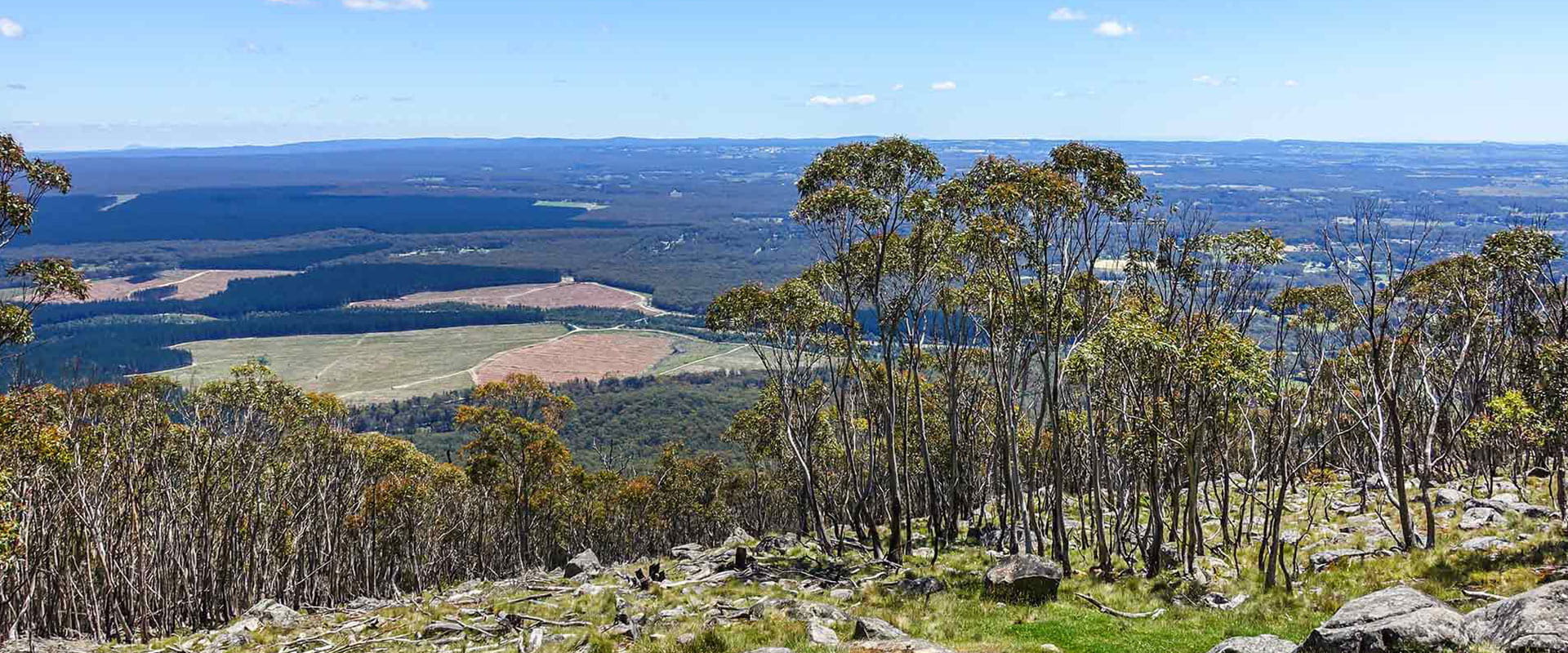
When Governor Bourke ascended Mount Macedon in 1837, local Aboriginal people told him the traditional name was Gee Burgh (Geboor). The mountain was significant hunting grounds and held deep cultural meaning for the Wurundjeri and surrounding peoples. The nearest grinding grooves for Mount William greenstone axes have been found here, making Geboor a key stop on an ancient trade route that passed through this country.
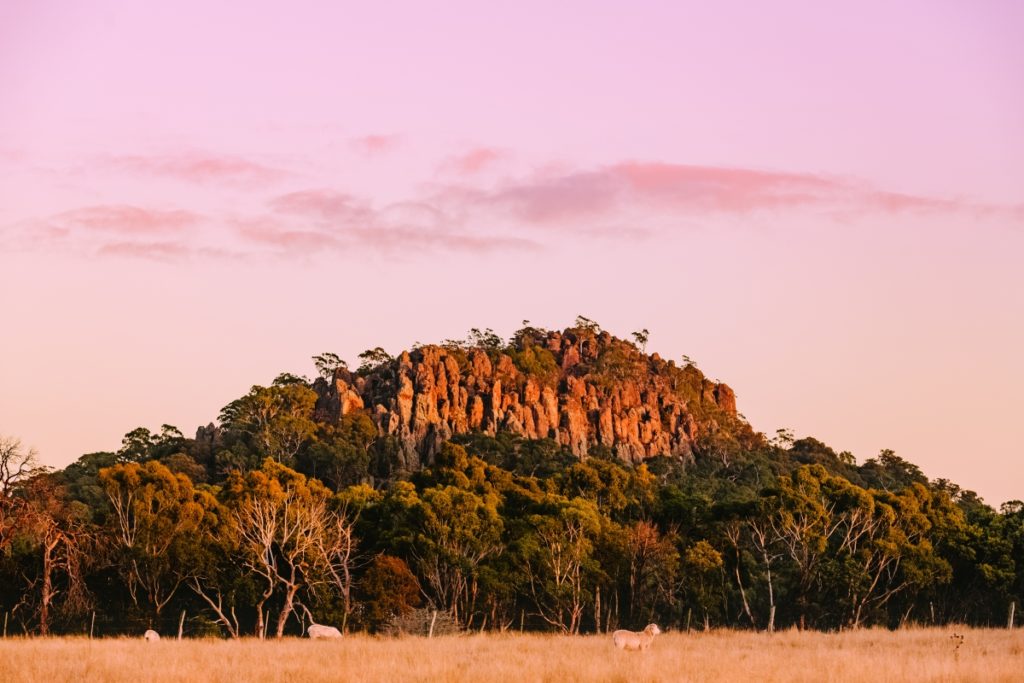
Located near the traditional boundaries between the three Aboriginal groups, Hanging Rock was a sacred place used for ceremonies, mediations and initiations for at least 26,000 years. Archaeological records show stone tools dating back 10,000 years, sourced from considerable distances — evidence of a vast social and trade network.
Perhaps the most significant site in the eastern Macedon Ranges. Wil-im-ee moor-ring means "axe place" in Woiwurrung. This greenstone quarry, comprising hundreds of mining pits, was the source of ground-edge axe heads traded across south-eastern Australia. Stone was quarried and roughed out here, then carried 29 kilometres to Mount Macedon (Geboor) to be sharpened and polished. Wurundjeri leader William Barak described how specific custodians controlled access, with neighbouring peoples sending messengers bearing opossum skin covers, weapons and ornaments to trade for stone. In 2012 land title was handed back to Kulin elders. It is now listed on the National Heritage List.
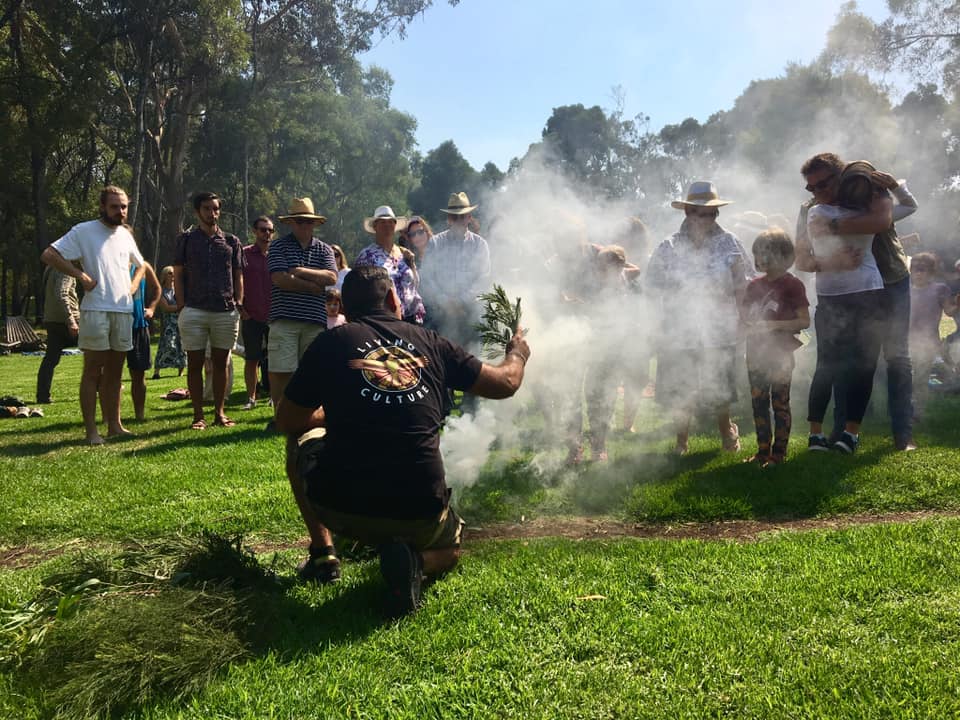
The Smoking Ceremony
A smoking ceremony, tanderrum in the language of the Kulin Nation, is one of the most significant cultural practices of the Wurundjeri and neighbouring peoples. Native plants, particularly eucalyptus and other aromatic species, are burned to create a cleansing, healing smoke that welcomes visitors to Country, marks key transitions and gatherings, and connects those present with the spiritual life of the land.
This ceremony is held before the start of every Back Paddock Ultra, a moment that grounds the event in country, and one that runners and spectators alike have come to deeply value.