The Farm Our Philosophy Country Grazing Animals How We Farm The Land Partners The Ultra The House Come & Stay Resources Contact
🌄 Photo 1 — Hero Background Wide landscape: farm, creek or sky at golden hour

The Farm at Mirrim Wurnit  ·  Macedon Ranges, Victoria

Living gently
on the land

A 100-acre regenerative farm, off the grid, on Wurundjeri country — Mirrim Wurnit, Deep Creek, where people, animals and country thrive together.

Scroll

The Farm

100 acres on
Deep Creek,
100% off the grid

100
Acres of land
30%
Set aside for biodiversity
1hr
From Melbourne
7+
Species in our care
MW

Mirrim Wurnit — the name given to us by the Traditional Owners for Deep Creek in the Woi wurrung language — winds through our 100-acre farm in the Macedon Ranges. We came here with a simple intention: to live well, to give more than we take, and to leave this land healthier than we found it.

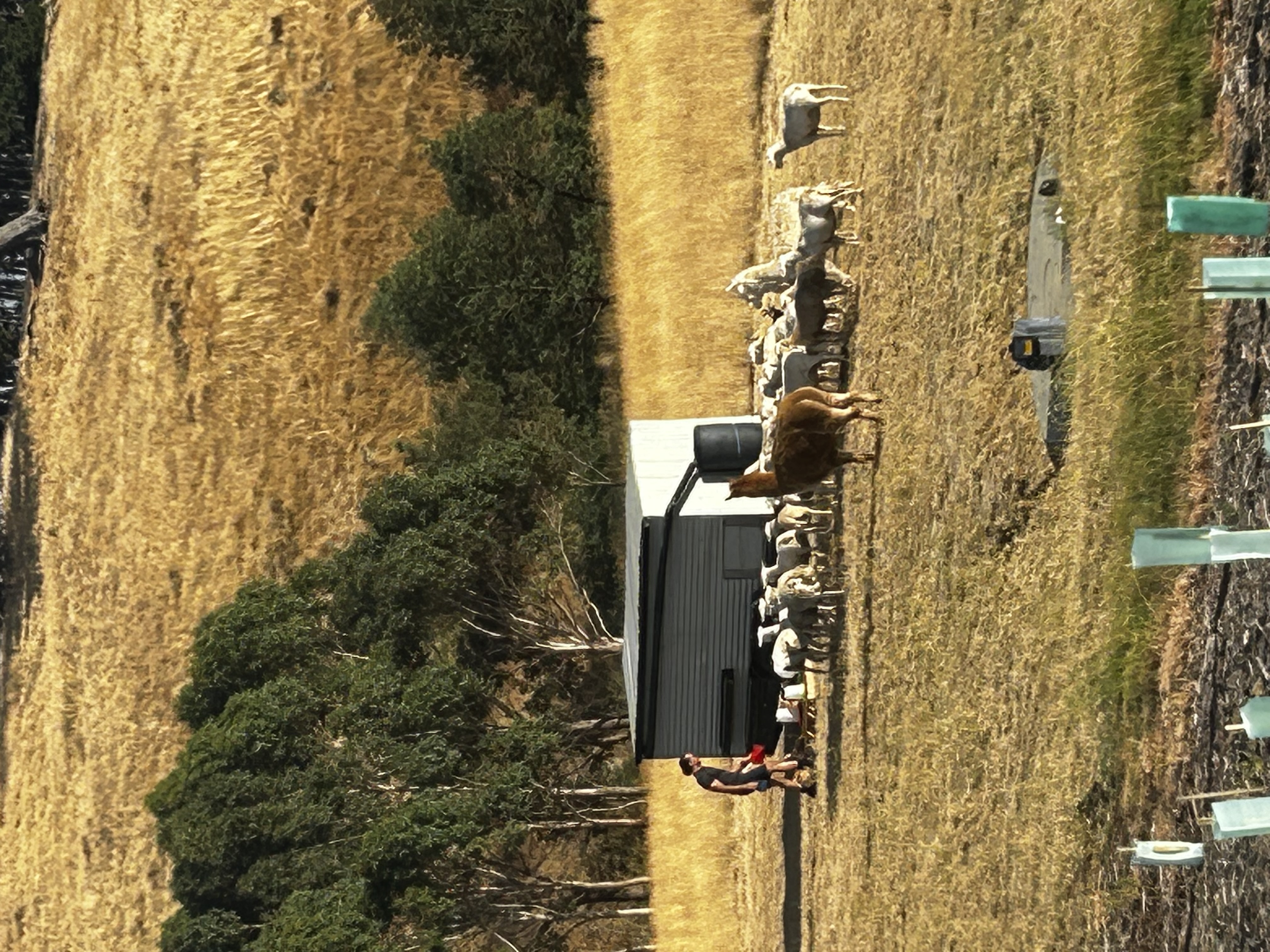
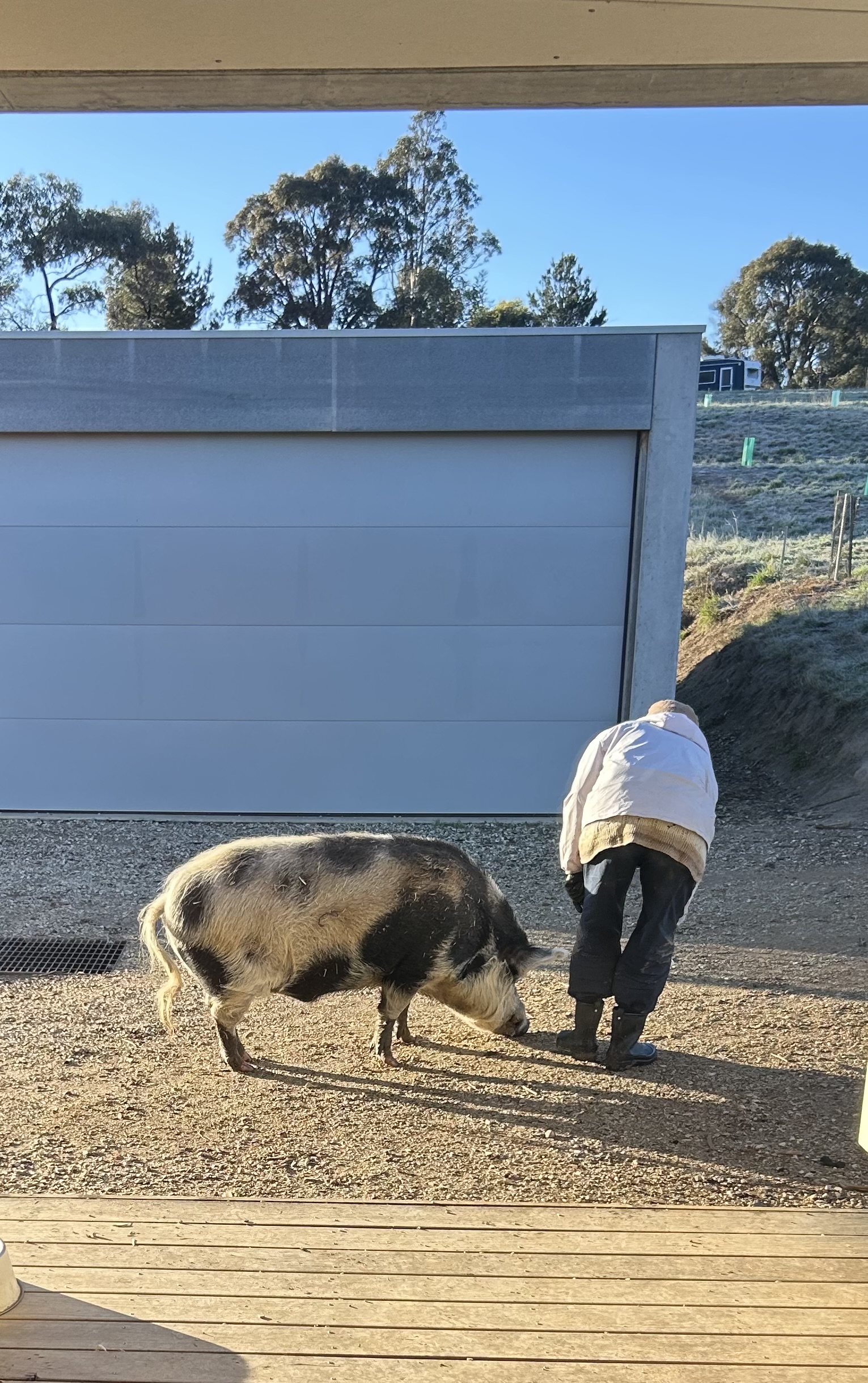
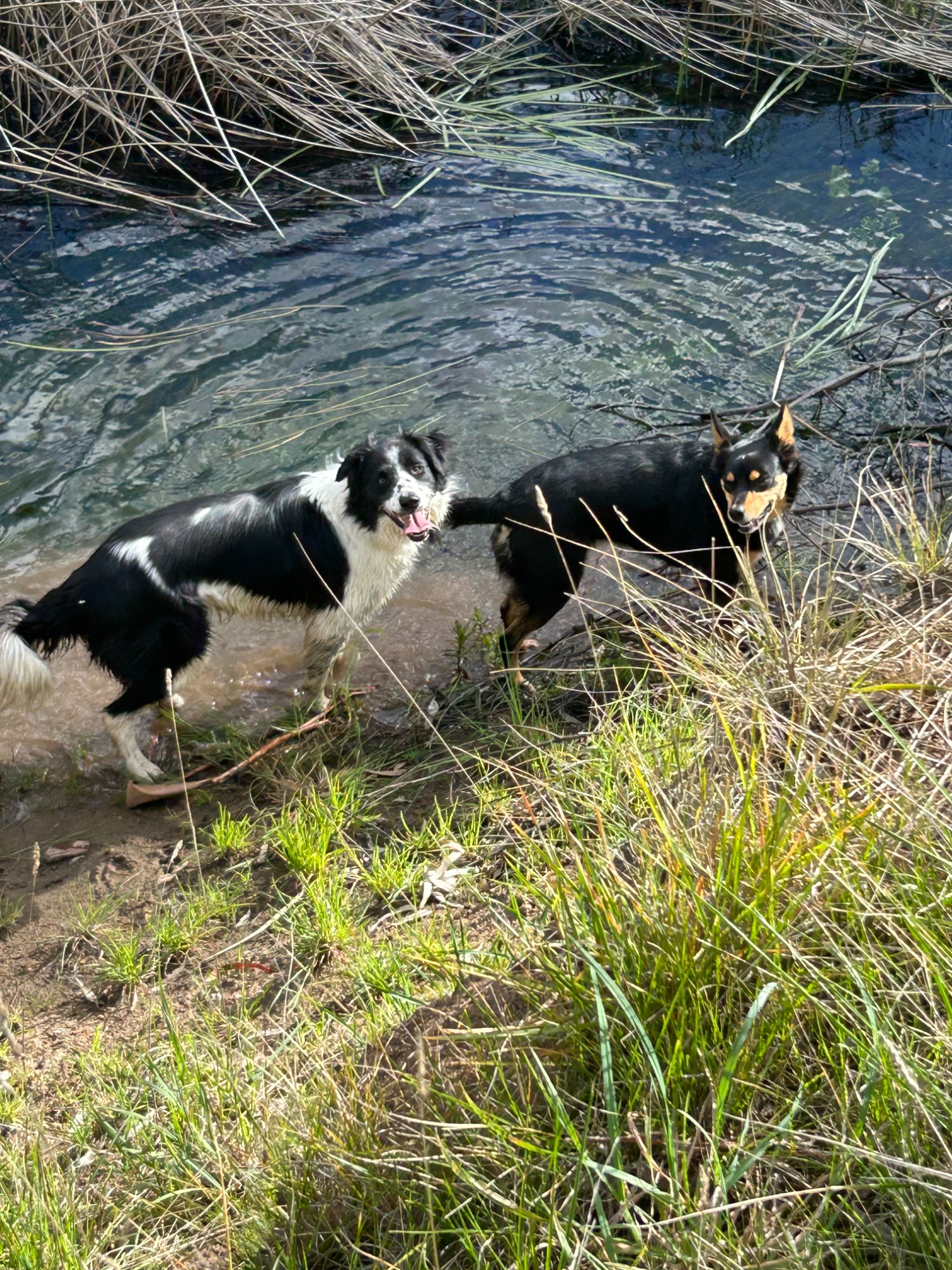
Our family and guests live here entirely off the grid — solar power, rainwater, local firewood and the creek for drawing water for livestock (plus Starlink, a necessary evil). Our chickens provide eggs daily, we grow vegetables for our own table, tend a small but growing herd of cattle and a flock of sheep, and share our paddocks with alpacas, our lovely dogs and Percy the Pig!

We think of ourselves not as owners but as custodians — temporarily responsible for a piece of country with its own deep history, its own intelligence, its own needs.

Peter & Kate Munns
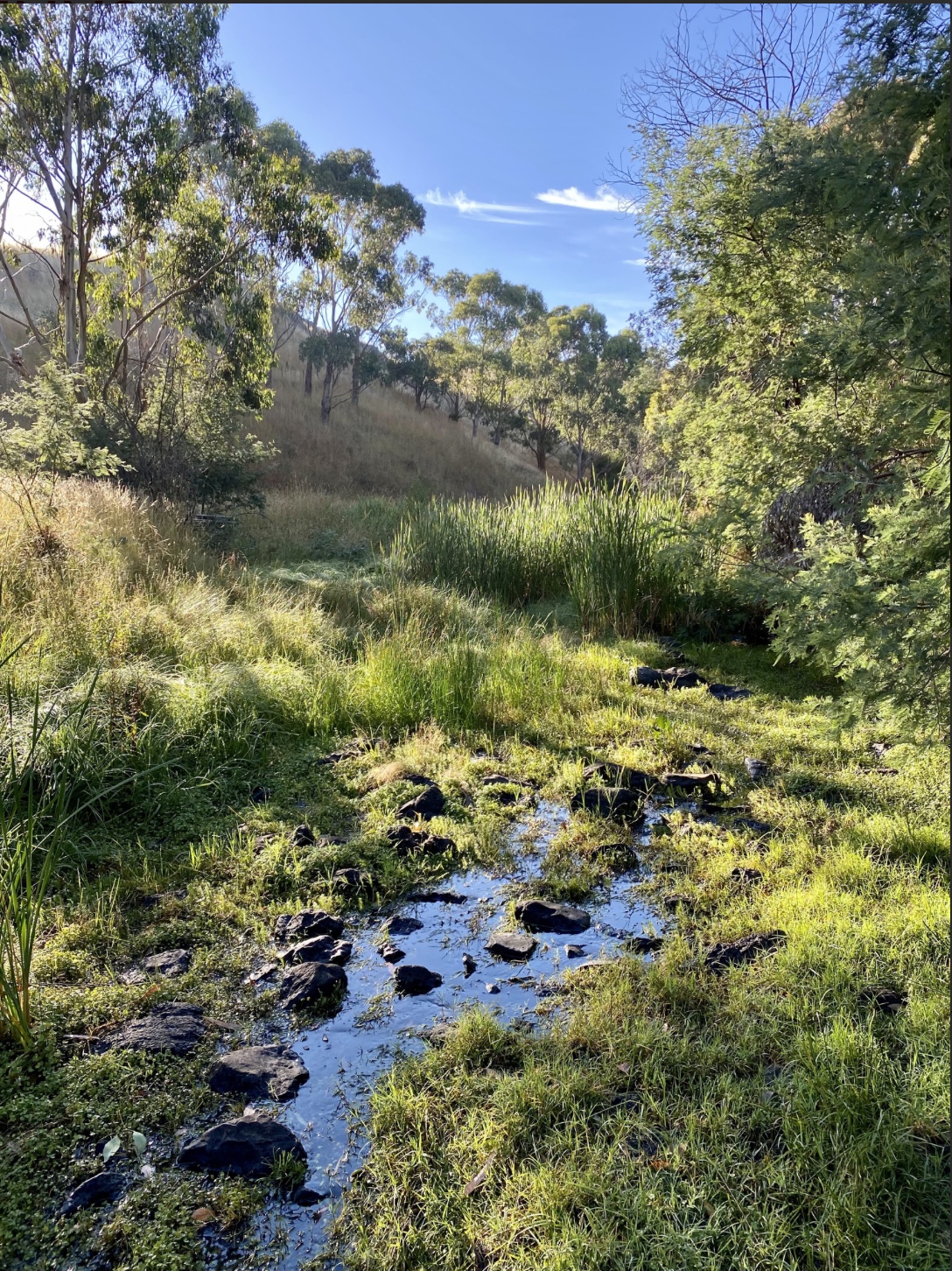
Deep Creek — Mirrim Wurnit — rocks, reeds and eucalypts
01

Custodianship

This is Wurundjeri country — Mirrim Wurnit, Deep Creek, has been cared for by the Wurundjeri Woi Wurrung people for tens of thousands of years. We approach our time here with humility, learning from country, returning what we can, and carrying a responsibility that is bigger than ourselves.

02

Regenerative Grazing

We follow holistic, regenerative grazing principles — moving livestock through paddocks in a planned pattern that mimics the natural movement of wild herds. Resting pastures between grazes builds topsoil, sequesters carbon, and restores the deep-rooted grasses that once covered this country.

03

Biodiversity Corridors

Up to 30% of our property is being permanently set aside for revegetation — planting thousands of native trees and understorey shrubs endemic to the Macedon Ranges. These areas will become habitat corridors, connecting remnant bush and giving wildlife room to move and thrive. Our Land Management Plan identifies several species of conservation significance in the area — Grey-crowned Babbler, Bush Stone-curlew, Long-nosed Bandicoot, Squirrel Glider and Brush-tailed Phascogale — and the revegetation is designed to support their return.

Always Was, Always Will Be — Aboriginal Land
We acknowledge the Wurundjeri Woi Wurrung people as the Traditional Owners of the country on which The Farm at Mirrim Wurnit stands

26,000 years of deep history*

Mirrim Wurnit — Deep Creek — sits on the traditional Country of the Wurundjeri Woi Wurrung people, part of the broader Kulin Nation, whose connection to this landscape spans at least 26,000 years. Colonisation disrupted and destroyed much of that living culture — but what survives tells us the eastern Macedon Ranges are rich in cultural significance: from the sacred heights of Mount Macedon (Geboor) and the ceremonial site of Hanging Rock (Ngannelong), to the Mount William stone axe quarry (Wil-im-ee Moor-ring) — an important source of greenstone axes traded across south-east Australia for thousands of years. The stone was quarried and roughed out here, then carried to Mount Macedon — just 29 kilometres away — where the nearest grinding grooves have been found, the same greenstone confirmed by analysis. A trade route that ran through this country. The Wurundjeri Woi Wurrung and their descendants remain active in this country today. We sit with that history lightly and with respect.

* The figure of 26,000 years reflects the oldest archaeological evidence found and dated to this point. It is likely that Indigenous occupation of this landscape extends much further back in time.

Sacred and significant places nearby

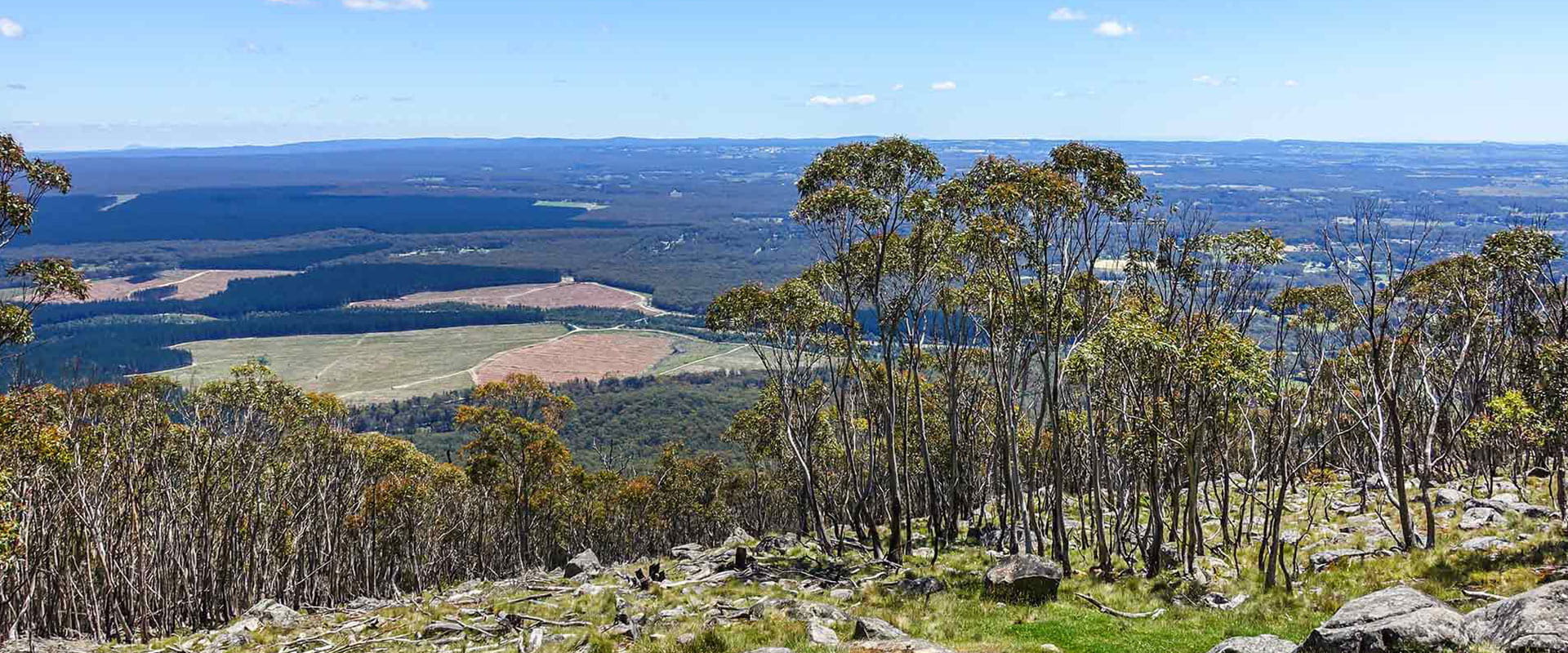
Summit views from Mount Macedon — Geboor
Mount Macedon
Geboor / Ghe Burrh

When Governor Bourke ascended Mount Macedon in 1837, local Aboriginal people told him the traditional name was Gee Burgh (Geboor). The mountain was significant hunting grounds and held deep cultural meaning for the Wurundjeri and surrounding peoples. The nearest grinding grooves for Mount William greenstone axes have been found here — making Geboor a key stop on an ancient trade route that passed through this country.

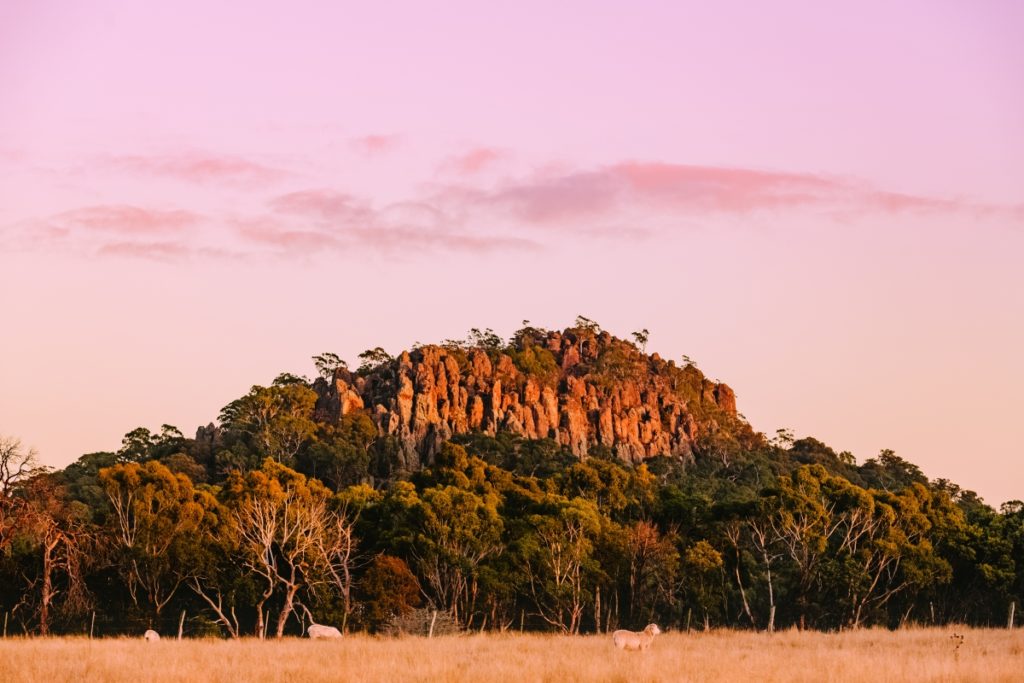
Hanging Rock at sunset — Ngannelong
Hanging Rock
Ngannelong / Anneyelong

Located near the traditional boundaries between the three Aboriginal groups, Hanging Rock was a sacred place used for ceremonies, mediations and initiations for at least 26,000 years. Archaeological evidence shows stone tools dating back at least 10,000 years, with stones sourced from considerable distances — evidence of a vast social and trade network.

Mount William Stone Axe Quarry
Wil-im-ee Moor-ring

Perhaps the most significant site in the eastern Macedon Ranges. Wil-im-ee moor-ring means "axe place" in Woiwurrung. This greenstone quarry — comprising hundreds of mining pits — was the source of ground-edge axe heads traded across south-eastern Australia. Stone was quarried and roughed out here, then carried 29 kilometres to Mount Macedon (Geboor) to be ground and polished. Wurundjeri leader William Barak described how specific custodians controlled access, with neighbouring peoples sending messengers bearing opossum skin covers, weapons and ornaments to trade for stone. In 2012 land title was handed back to Kulin elders. It is now listed on the National Heritage List.

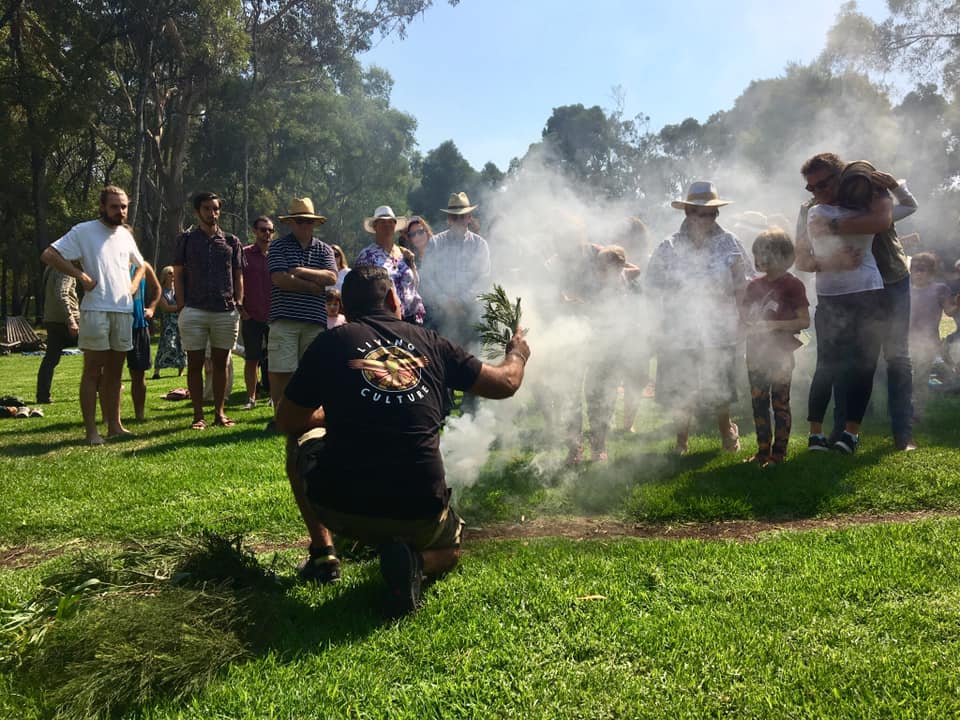
Smoking ceremony at The Farm at Mirrim Wurnit, Back Paddock Ultra

The Smoking Ceremony

A smoking ceremony — tanderrum in the language of the Kulin Nation — is one of the most significant cultural practices of the Wurundjeri and neighbouring peoples. Native plants, particularly eucalyptus and other aromatic species, are burned to create a cleansing, healing smoke that welcomes visitors to Country, marks significant transitions and gatherings, and connects those present with the spiritual life of the land.

A smoking ceremony is held before the start of every Back Paddock Ultra — a moment that grounds the event in country, and one that runners and spectators alike have come to deeply value.

Regenerative
& holistic
grazing

Regenerative grazing begins with a single observation that changes everything: livestock, managed well, are not a problem for the land — they are the solution. The key is movement. Animals that graze one area and move on, allowing long rest periods before returning, mimic the behaviour of the wild herds that built the world's great grasslands over millions of years.

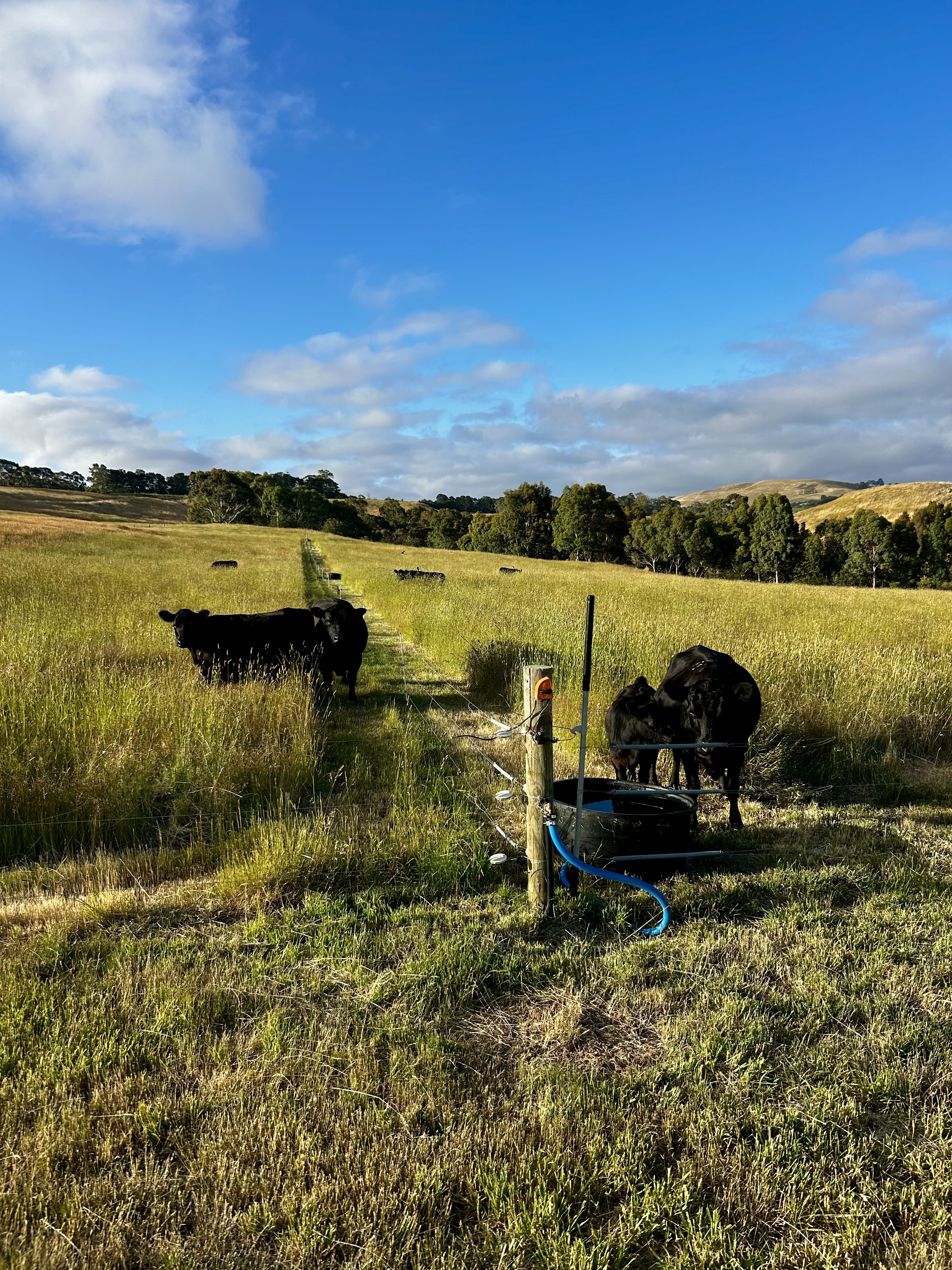
At The Farm at Mirrim Wurnit, we divide our 60 acres of pasture into multiple paddocks using a combination of semi-permanent and temporary electric fencing, rotating our Dexter/Lowline cattle and Aussie White sheep through them on a planned schedule. Our chickens move with the sheep — following behind to scratch through the manure, break parasite cycles, and forage the insects that the sheep stir up. Our alpacas work as guardian animals for both the flock and the chickens, keeping a watchful eye out for foxes and other predators. Each paddock rests for months between grazing events. The grass recovers fully, roots deepen, organic matter builds, and the soil comes alive.

The results show up in the ground: improved water infiltration, more diverse pasture species, reduced erosion, and a steady increase in the sponge-like quality of the soil that makes this landscape more resilient to both drought and flood — exactly what country in the Macedon Ranges needs.

Thinkers & practitioners who have shaped our approach

Allan Savory
Holistic Planned Grazing · Zimbabwe / USA

Savory's Holistic Planned Grazing framework — developed over decades of field observation across Africa and the Americas — demonstrated that large herds of animals, properly managed, can reverse desertification and rebuild grassland soils. His insight that the land needs animal impact, not less of it, is the foundation of everything we do here. savory.global →

Peter Andrews
Natural Sequence Farming · Australia

The New South Wales farmer who developed Natural Sequence Farming — the practice that underpins our whole approach to land and water at Mirrim Wurnit. Working against the grain of conventional agriculture, Andrews restored degraded catchments by slowing water, rebuilding organic matter and letting landscapes rehydrate themselves. His two books, Back from the Brink and Beyond the Brink, are essential reading for anyone serious about land restoration in the Australian context.

Charles Massy
Call of the Reed Warbler · Australia

Massy's landmark book Call of the Reed Warbler brought the regenerative agriculture movement to an Australian audience, documenting farmers across the country who had transformed their land through holistic thinking. As both a farmer and a scholar, he gave Australian regenerative agriculture its own voice — and its own deep connection to country. Watch him talk →

Jason McAinch
Healthy Landscapes · Macedon Ranges Shire Council

Jason McAinch leads the Healthy Landscapes program at Macedon Ranges Shire Council — working directly with landholders across the region to restore ecological function, improve biodiversity and build more resilient farming systems. His on-ground knowledge of the Macedon Ranges landscape, and his practical, partnership-based approach, have been invaluable to our work at The Farm at Mirrim Wurnit. Healthy Landscapes →

Our grazing
infrastructure

Effective rotational grazing depends on being able to move animals quickly and reliably. We use a combination of semi-permanent and temporary electric fencing across our paddocks, giving us the flexibility to adjust cell sizes and rotation times as conditions change.

Semi-permanent internal fencing
Kiwitech
Robust, low-maintenance posts and wire for fixed paddock subdivision — the backbone of our rotational system.
Temporary fencing — reels & posts
Gallagher
Gallagher reels and step-in posts let us quickly subdivide paddocks and precisely control grazing area and duration.
Electric energiser
Gallagher
Gallagher electric charger powers the entire fencing network — reliable, solar-compatible and farm-proven.
Power source
Off-grid solar
The entire fencing system runs from our 15.12 kW solar array — no grid power, no running costs.

The community of creatures

🐄
Dexter / Lowline
Grazing herd
🦙
Alpacas
Guardians of lambs & chooks
🐑
Aussie Whites
Meat sheep
🐓
Chickens
Egg layers — move with the sheep
🐕
Dogs
Farm companions
🐷
Percy the Pig
Chief personality
🐈
Cat
Mouser & supervisor

Natural
Sequence
Farming

Contours being installed now

Natural Sequence Farming (NSF) is a framework for understanding how the landscape functioned before human interference — and for actively restoring those functions. It begins with a simple but profound observation: that plants manage water, and water builds everything. Together, they are the engineers of a healthy landscape.

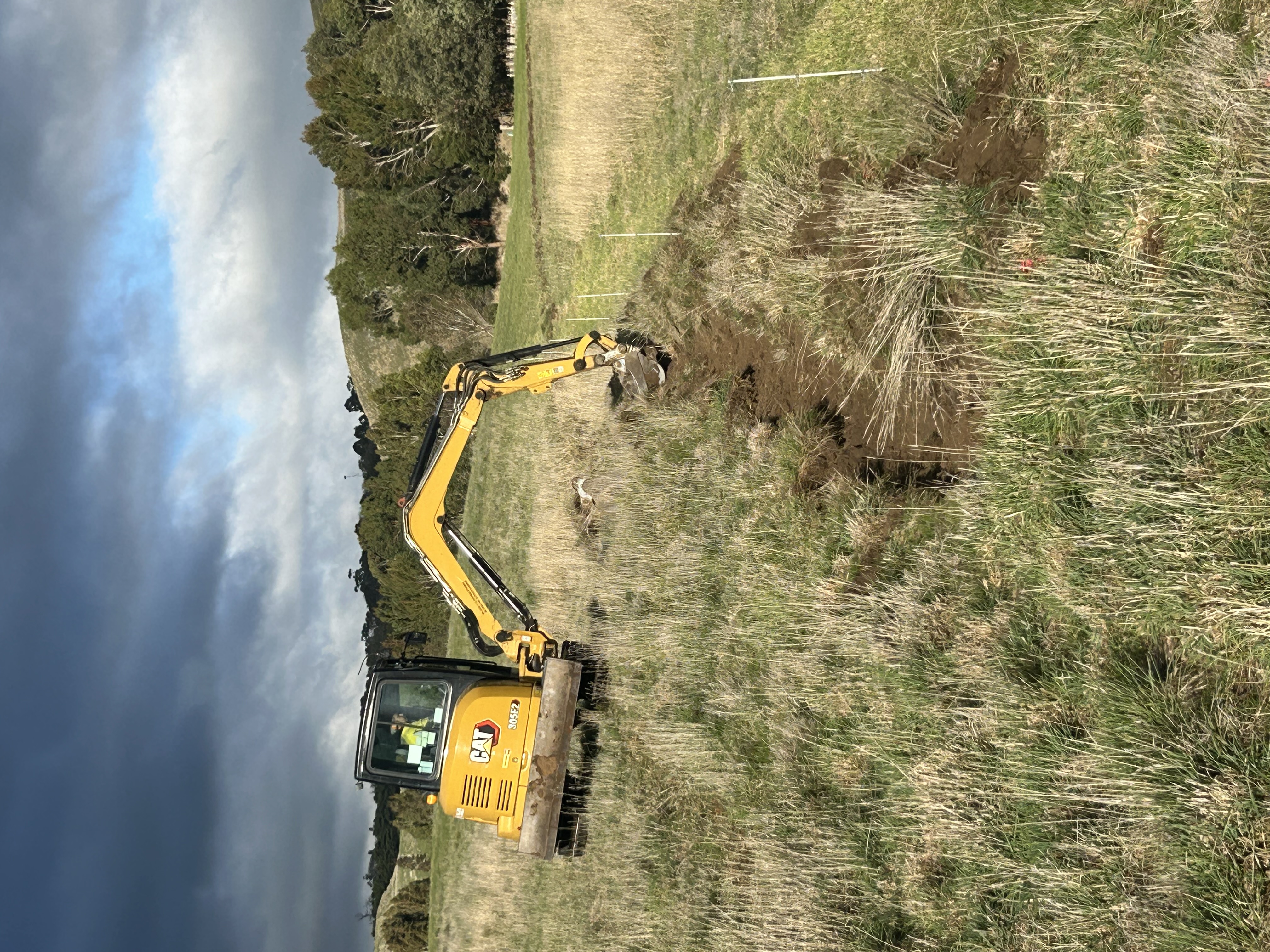
At The Farm at Mirrim Wurnit, we are putting NSF principles into practice on the ground. We are currently installing contour banks across the property — earthworks that slow the movement of water down slope, spreading it across the land rather than allowing it to race off into the creek. This rehydrates the soil, reduces erosion, lifts the water table, and begins to rebuild the deep landscape function that once made country like this extraordinarily productive.

Combined with our revegetation work, holistic grazing and riparian fencing along Mirrim Wurnit, the contours are part of a long-term commitment to landscape restoration — working with the patterns of country rather than against them.

The Five Pillars of Natural Sequence Farming — hover to explore

01
Slow the Flow

Contour banks, swales and retained vegetation slow water moving across and through the landscape — above and below ground — giving it time to sink in rather than run away.

02
Let All Plants Grow

Every plant has a role in landscape succession. Nature determines what is needed. We listen before we pull — understanding that so-called weeds are often responding to a landscape in need.

03
Careful Where Animals Go

Sensitive areas — creek banks, wetlands, newly planted zones — are fenced and rested. Animals are used as tools where beneficial and excluded where the land needs to heal.

04
Filtration is Essential

Wetlands and floodplains naturally filter water and process fertility before it leaves the landscape. We are working to reinstate these areas along Mirrim Wurnit so nutrients cycle back through the system.

05
Return to the Top

Fertility that accumulates in lower areas must return upslope to close the loop. Grazing management, composting and strategic plantings all help cycle nutrients back up the landscape system.

"One of the best things I've learnt is to manage for what you want, not what you don't want. I apply this to my thinking about weeds — the main one here is Chilean Needle Grass — so rather than spraying poisons and doing mechanical removal, we are letting the pasture revert to more palatable grasses by managing grazing and improving hydrology."

— Peter Munns

Want to learn more about Natural Sequence Farming?

Tarwyn Park Training → Forage Farms — NSF explained →
Excavator digging contour swales at The Farm at Mirrim Wurnit

Contours being cut — Digger at work on the slopes above Deep Creek

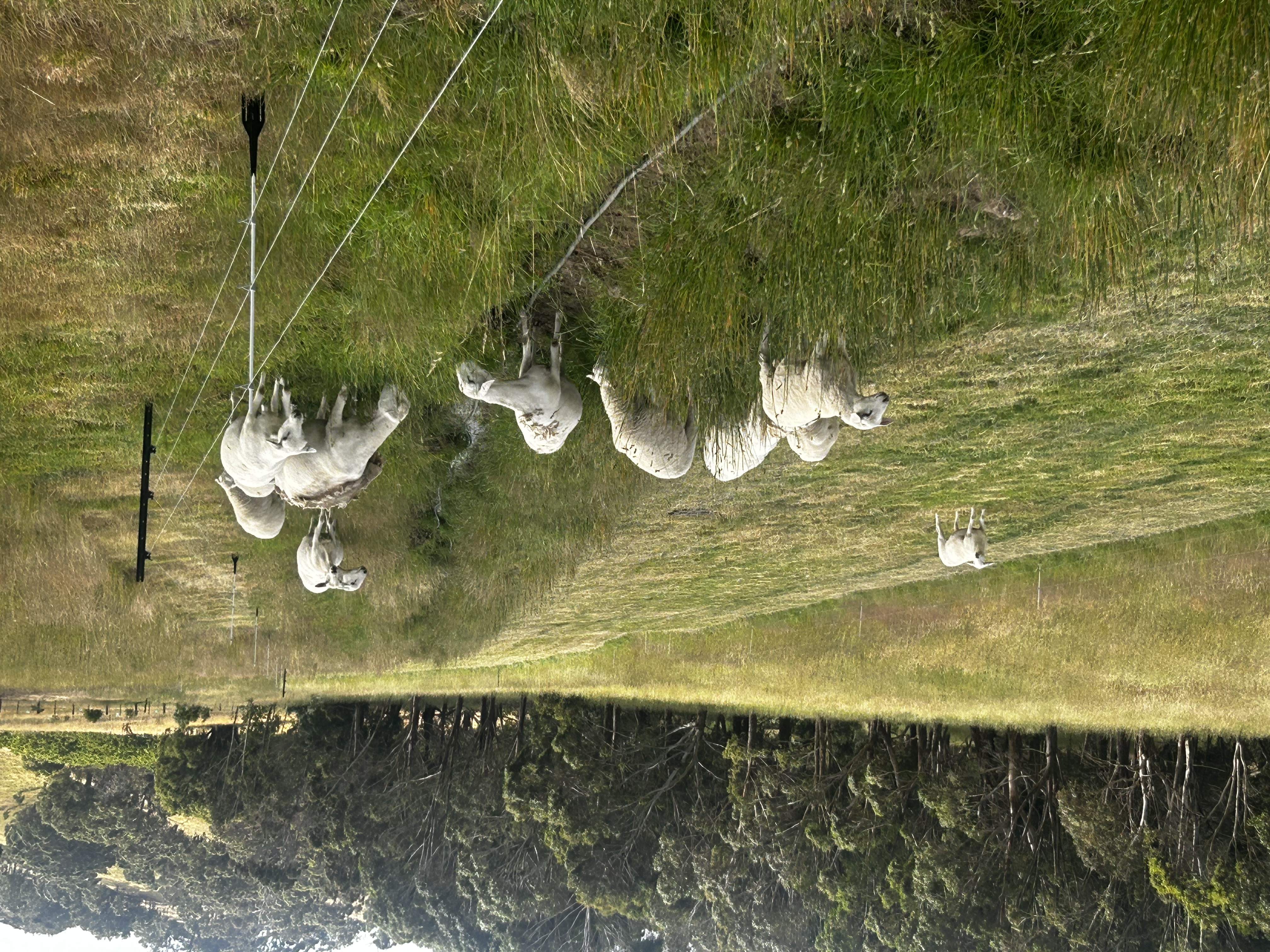
Aussie White sheep grazing along a completed contour swale at The Farm at Mirrim Wurnit

Contours in action — Aussie Whites grazing the swale margins, electric fence in the foreground

Looking Ahead

We are currently reviewing the use of indigenous cultural burning to improve and manage our grasslands, fostering the growth of native species. Cultural burning — practised by First Nations peoples across Australia for tens of thousands of years — uses low-intensity, carefully managed fire to rejuvenate country, reduce fuel loads, and encourage the regeneration of native grasses and plants. As we learn more, we hope to integrate these practices alongside our regenerative grazing and Natural Sequence Farming approach.

Working land &
wild land together

Not all land should be farmed. We're actively transitioning up to 30 acres — 30% of the property — from farmland into permanent native habitat. The remaining 70 acres is managed holistically: grazed, rested, monitored and adjusted season by season. The property straddles the boundary of two bioregions — the Central Victorian Uplands and the Victorian Volcanic Plain — which accounts for much of the landscape diversity here, from the volcanic rocky escarpments on the hilltops to the rich creek flats below.

Alongside the revegetation work, the banks of Deep Creek itself have been carefully fenced and planted to reduce erosion and shade the water, encouraging the return of platypus, fish and aquatic invertebrates. Access to the paddocks on the far side of the creek will eventually require a ford crossing — designed and built in collaboration with Melbourne Water — a practical reminder that farming around a culturally and ecologically sensitive waterway takes patience and care. Our work on Deep Creek sits within a larger vision for the landscape — we are supporting and consulting with the Biolinks Alliance, whose Deep Creek Biolink project aims to restore ecological connectivity along the creek system and beyond. Although the farm is currently outside the boundary of their project area, our revegetation and corridor-building share the same goals.

"We are the current custodians — the land was here long before us, and will be here long after."
— Kate Munns
100 acres
Biodiversity, revegetation & creek / riparian 30%
Managed grazing pasture 60%
Fruit trees & vegetables 5%
Home, garden & infrastructure 5%

Growing country,
together

Our revegetation work — planting thousands of indigenous trees, shrubs and grasses across The Farm at Mirrim Wurnit — is made possible through partnerships with four outstanding organisations.

Our approach

Every plant we put in the ground is chosen to match the local ecosystem — specifically the three Ecological Vegetation Classes (EVCs) mapped on this property: Plains Grassy Woodland, Stream Bank Shrubland and Herb-rich Foothill Forest. We're not planting generic native species; we're rebuilding the precise plant communities that belong here, with the insects, birds and animals that depend on them. The deep root systems of established native vegetation also play a vital practical role — intercepting and absorbing agricultural runoff, including animal manure, before it reaches Deep Creek and the broader waterway system.

Succession planting

We plant in stages, working with the logic of ecological succession. First come the fast-growing pioneer species — acacias and other native shrubs that establish quickly, fix nitrogen from the air and create shelter for what follows. Into that framework we plant native grasses and forbs. Over time, as conditions improve, we introduce the canopy trees and the mid and understorey species that make up a mature, self-sustaining woodland — giving back to the land something closer to what was here before.

Better farming, not less

Committing 30% of the property to biodiversity isn't a concession — it actively improves the productivity of the remaining 70%. Shelterbelts and windbreaks reduce stock stress and pasture desiccation. Native vegetation on slopes and creek margins holds soil in place and keeps water in the landscape longer. Increased insect diversity supports pollination and natural pest control. Deep-rooted native plantings draw up and cycle nutrients that shallow-rooted pasture grasses can't reach. A more biodiverse farm is a more resilient farm — better able to handle drought, flood and the pressures of a changing climate in the Macedon Ranges.

Melbourne Water
Victorian Government Authority

Melbourne Water manages the rivers, creeks and waterways of the Port Phillip and Westernport region, including Mirrim Wurnit. Their Stream Frontage Management program supports landholders like us to fence, revegetate and restore the creek banks that protect water quality for all Melburnians.

melbournewater.com.au →
TreeProject
Non-Profit · Victorian Revegetation

Since 1989, TreeProject has been connecting urban volunteers with rural landholders to grow and plant indigenous seedlings across Victoria. Their volunteer growers propagate the local provenance trees and understorey species we need — plants grown by people in their own backyards, specifically for land like ours.

treeproject.org.au →
Landcare Australia
National Community Network

Landcare is Australia's largest community environment movement — a network of more than 100,000 volunteers caring for country at a local level. Our local Landcare group provides on-ground knowledge, community connections and practical support for our revegetation and landscape restoration work at The Farm at Mirrim Wurnit.

landcareaustralia.org.au →
We work with

Dug into the hill,
facing the escarpment

The house at The Farm at Mirrim Wurnit is not a typical Australian farmhouse — and that is very much the point. Designed by Clinton Murray Architects, the brief was to create a home that could hold its own against the drama of the landscape: the creek to the west, the escarpment rising beyond it, the falcons nesting in the rock face, and a valley that funnels bitter winds from north and south in winter and bakes in summer.

The response was to dig the house into the hill — building protective walls from insulated concrete to buffer the extremes — while softening the interior with timber, colour and fine detail. From the outside it reads as simple, almost brutish in the paddock. Inside it is warm and considered. It sits a respectful distance from the creek, its form mirroring the drama of the escarpment opposite.

Off the grid from the outset — solar, rainwater, no mains connection — the house was designed to live within what the site provides. The valley's climate demanded it.

"Where do you start when you're asked to design a house in a paddock? All before you is grass and flies and the distant moo or two. But this paddock was bordered on the west by a creek and beyond that creek a dramatic escarpment, home to a family of falcons and a feed of rabbits. Our design is an attempt to mirror the drama of the escarpment." — Clinton Murray Architects
Designed by
Clinton Murray Architects
clintonmurray.com.au →
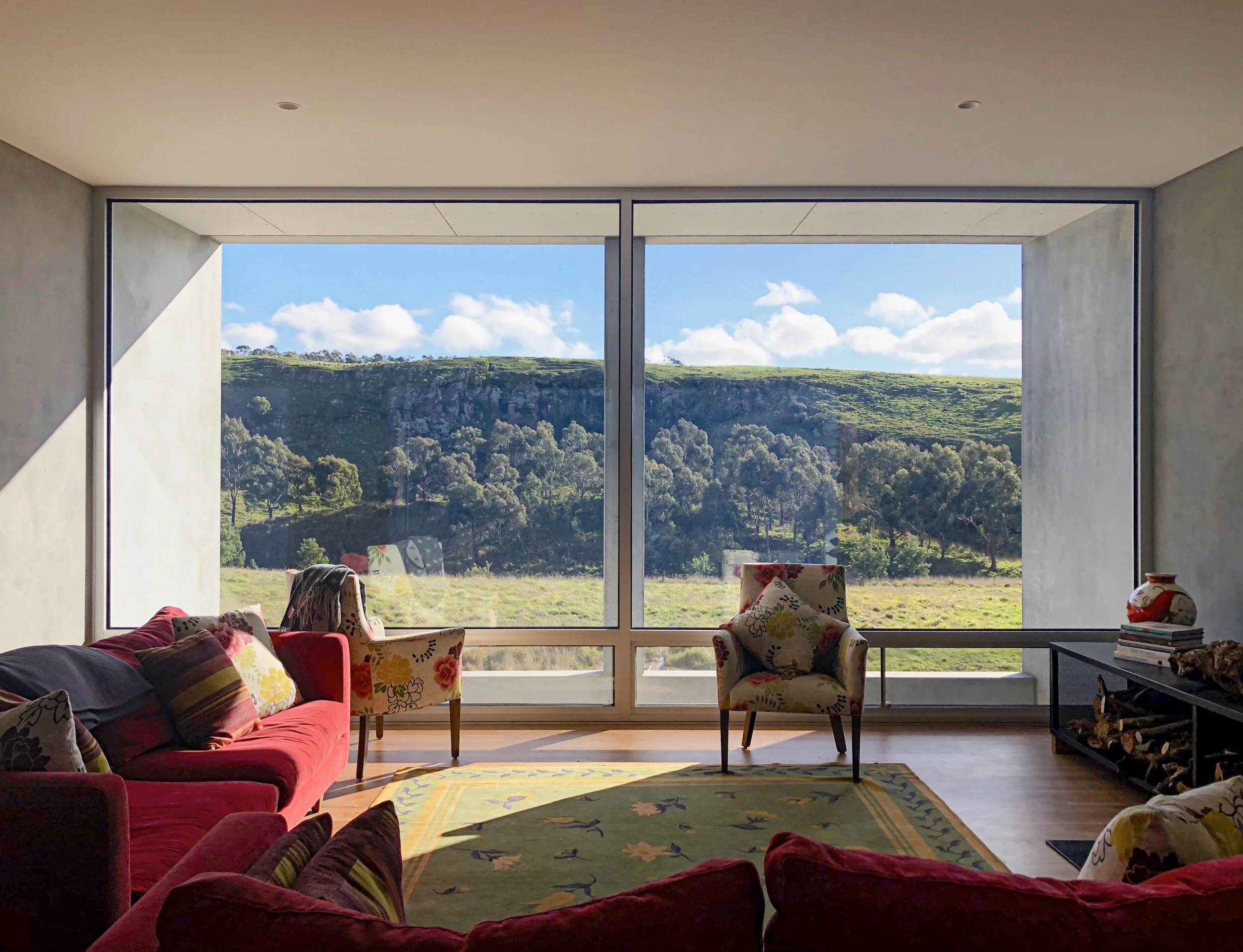
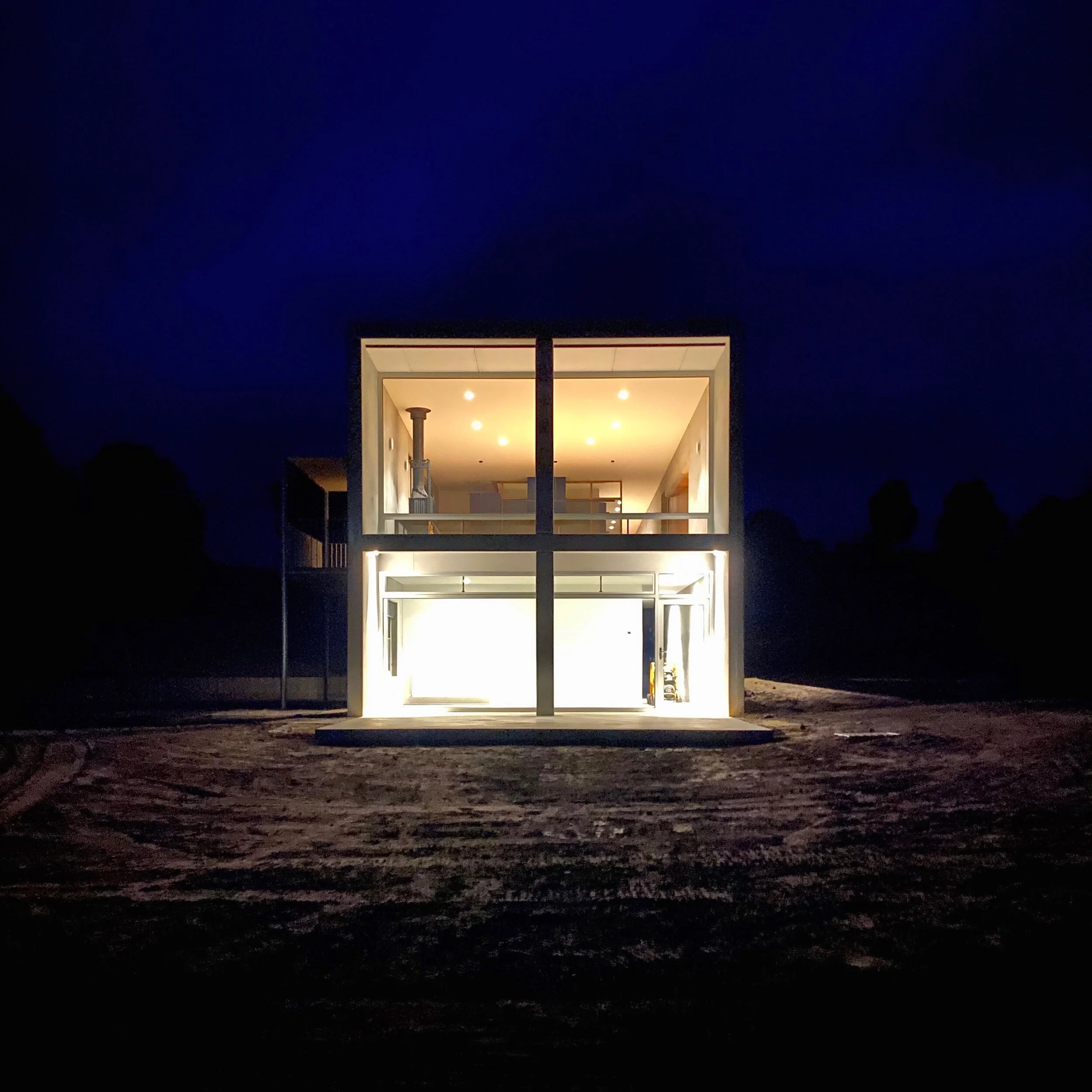
The house at The Farm at Mirrim Wurnit — Clinton Murray Architects
Interior — The Farm at Mirrim Wurnit The house in the paddock — Mirrim Wurnit Detail — The Farm at Mirrim Wurnit
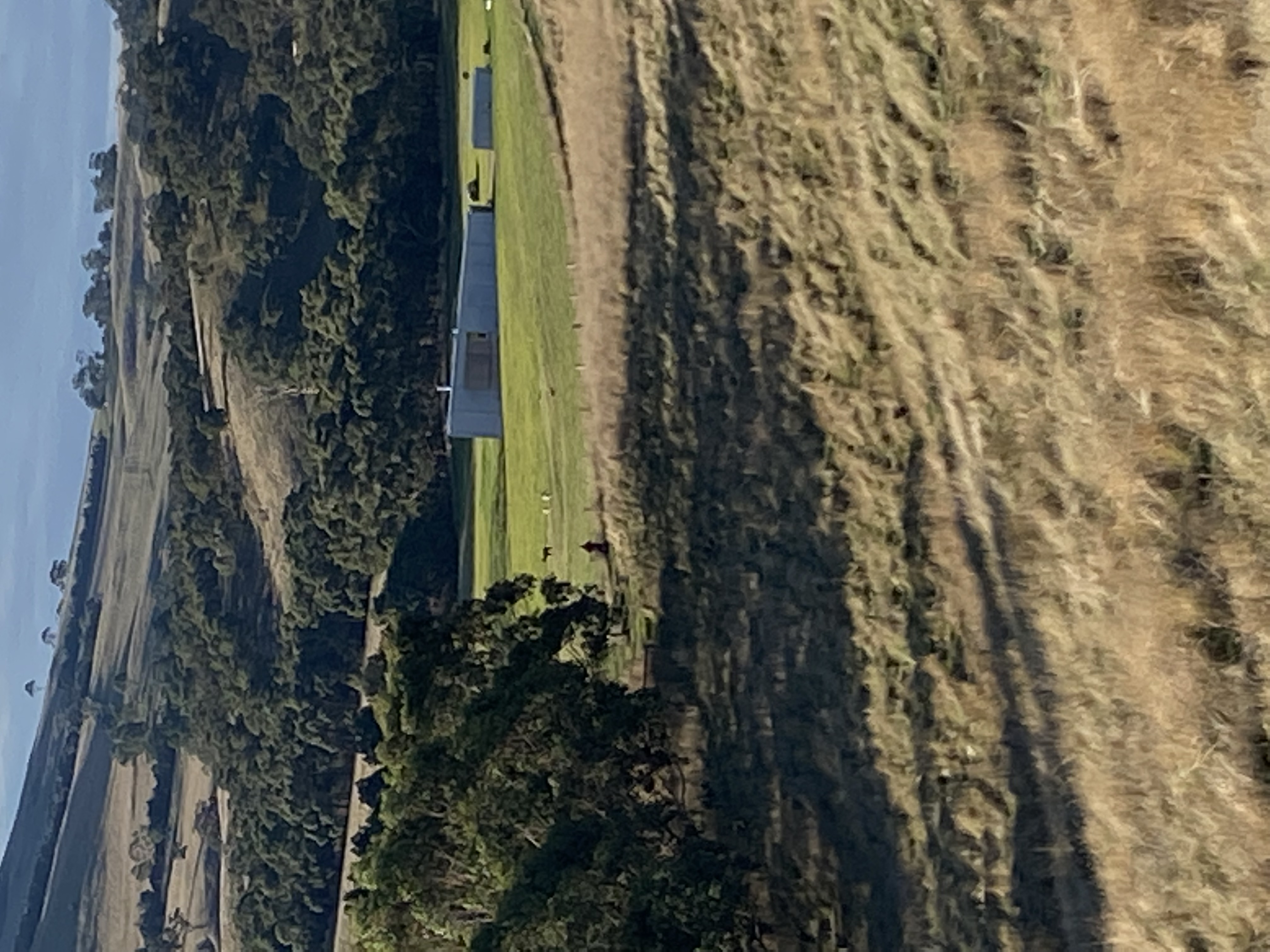
The house from the top paddock — The Farm at Mirrim Wurnit

From the top paddock — the house sitting low in the landscape, Macedon Ranges hills behind

Entirely off the grid

☀️

Solar Power

No mains connection, no grid dependency — our entire property runs on sunlight stored in batteries. The system is sized for a working farm, not just a house.

Solar array 15.12 kW
Battery storage 2 × 15.4 kWh — BYD
Total storage 30.8 kWh
Inverters Fronius
Backup generator 13 kVA
🌧️

Rainwater

Drinking and household water is collected from our roof and stored in large tanks — up to 120,000 litres behind the garage and 30,000 litres under the house. Deep Creek provides water for the animals and irrigation.

💧

Livestock Water

A dedicated solar array by the creek powers a pump that lifts water up to a header tank. Gravity does the rest — sending water through underground pipes to wherever the animals need it across the property. Three fixed concrete troughs serve our main grazing areas, but the backbone of our system is a network of Kiwitech movable troughs that attach to taps along the buried pipes — so water follows the animals as they move through the rotational grazing system, rather than the other way around.

♻️

Closed Loop

Waste is something we are very conscious of. As far as possible we try to compost or recycle on property. We have our own septic solution which feeds in to part of the paddocks, and of course animal manure and urine already directly feeds pasture. We try to use fallen branches for firewood as much as possible and in time will plant our own woodlot. Then it just comes down to aiming for as little else leaving the property as possible. Hay is another thing — we may buy it in occasionally but we never send fertility off-farm in that form.

MW Back Paddock Ultra logo
🥇 Australia's original backyard ultra 📅 Est. 2019 🌿 Autumn 📍 Macedon Ranges 🏃 Backyard Format 💧 Creek Crossings

Next Event

Saturday 7th March 2026

Starting at 9:00 am

🏅 Winners

David Giles 2019  ·  33 yards
Assist — Shane Holstein
Ross McPhee 2021  ·  31 yards
Assist — Donald Bailey
Tim Kacprzak 2022  ·  35 yards 🏆
Assist — Dan Camac

Race Status

🥇 1 Golden Ticket race — direct entry to the World Championships
🥈 2 Silver Ticket races — direct entry to the Australian Championships
🌏 1 World Satellite race — In October 2022, Phil Gore set a new Australian record here, running from 59 to 75 yards, pushed to the end by Ryan Crawford

Run until you
can't — on real country

The Mirrim Wurnit Back Paddock Ultra holds a special place in Australian running history: we ran our first event in 2019, making this Australia's original backyard ultra. Each autumn since, runners have returned to The Farm at Mirrim Wurnit to test themselves on our paddocks, creek crossings and bush tracks in the Macedon Ranges.

The backyard ultra format is beautifully brutal: one 6.7km lap on the hour, every hour, until only one runner remains. No set finish line. No fixed distance. Just you, the land, and the question of how many times you can loop through the back paddocks before your legs or your will gives out first.

We are proud members of AUTRA — the Australian Trail & Ultra Running Association, the peak body for ultramarathon and trail running in Australia.

In 2022 we were honoured to welcome Lazarus Lake — Gary Cantrell, the Tennessee farmer who invented the backyard ultra format and created the legendary Barkley Marathons — to The Farm at Mirrim Wurnit. His visit meant a great deal to us and to our running community.

2019
First event
6.7km
Per lap
Autumn
Mar – May
Follow on Facebook → AUTRA Member →
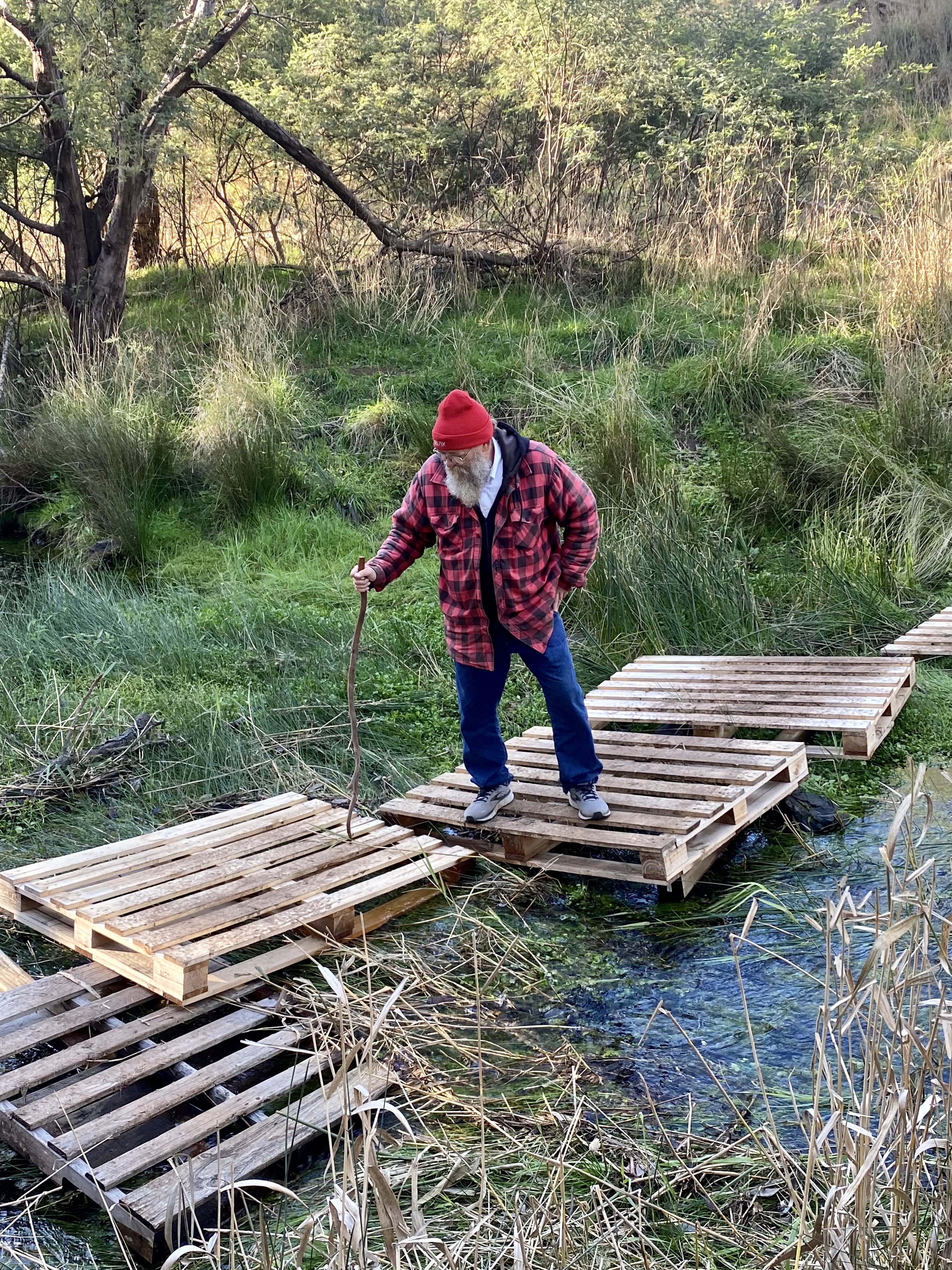
Lazarus Lake crossing Deep Creek on the pallet bridge at The Farm at Mirrim Wurnit, 2022

Lazarus Lake — Gary Cantrell

Inventor of the backyard ultra & the Barkley Marathons · Mirrim Wurnit, 2022

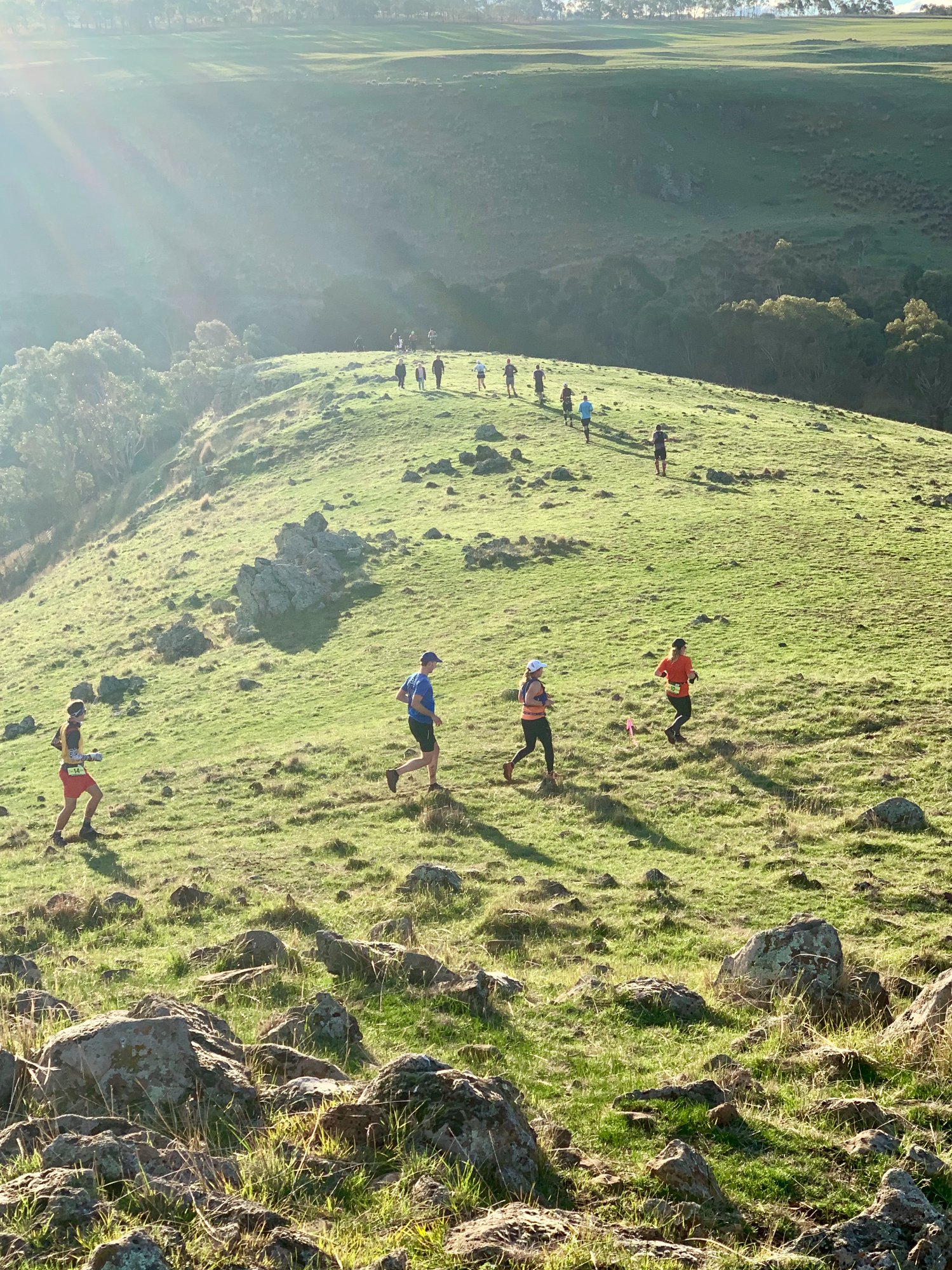
Runners on the rocky ridge at the Back Paddock Ultra, The Farm at Mirrim Wurnit

On the ridge

Runners cresting the rocky ridge at the Back Paddock Ultra

Two ways to experience
The Farm at Mirrim Wurnit

Short-term Escape

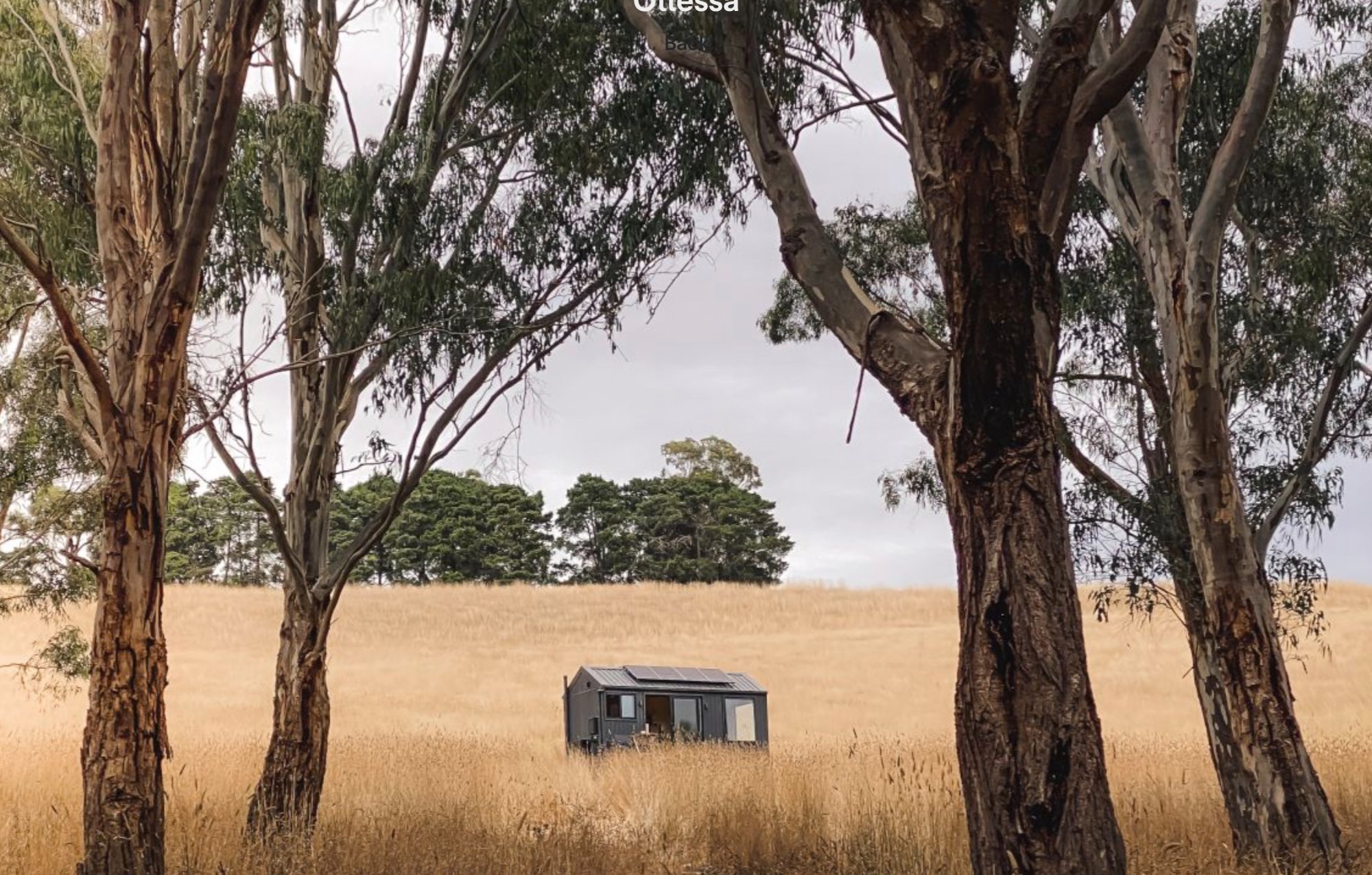
Ottessa

An off-grid cabin in the Macedon Ranges

Ottessa is our Unyoked cabin — a beautiful, off-grid retreat on the banks of Mirrim Wurnit. Come for a night or a few days. Wake to mist on the creek, spend your days watching the farm move through its rhythms, and fall asleep under an unpolluted sky.

No wi-fi. No agenda. Just the sounds of country, a wood fire, and all the time in the world to remember what quiet feels like.

🛏️ Self-contained off-grid cabin
🌿 Working farm and bush/creek surroundings
🚫 No wi-fi, by design
📍 ~1 hour from Melbourne CBD
Book Ottessa via Unyoked →
Volunteer Farmstay

WWOOF

Work, learn and live on the land

We welcome WWOOFers — willing workers on organic farms — who want to roll up their sleeves, learn about regenerative land management, and spend meaningful time in genuine country. In exchange for a few hours of help each day, we offer accommodation, meals and a real window into off-grid farm life.

Help with fencing, planting, animal care, vegetable gardening, or whatever the season calls for. You'll leave with your hands in the soil and a better sense of how food and land connect.

🌱 Regenerative & holistic farming practices
🏡 Accommodation & meals provided
4–5 hours work per day, weekends mostly free
🌾 Seasonal tasks: planting, animals, fencing & more
Join us as a Worker →
Ottessa cabin in golden grass at The Farm at Mirrim Wurnit
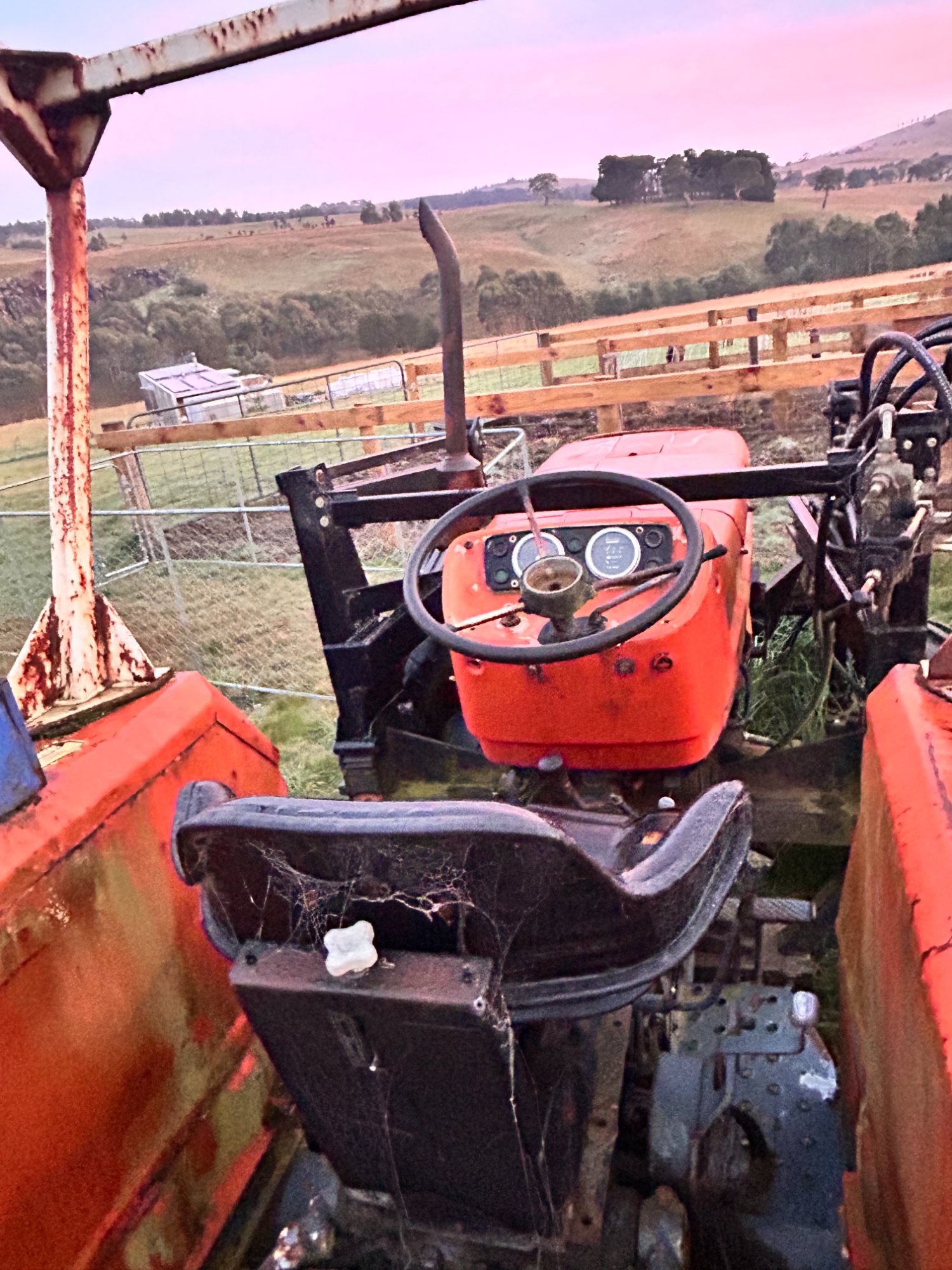
Tractor at The Farm at Mirrim Wurnit at sunset

Things that inform us

The books, podcasts and videos that have shaped how we think about farming, land and country. Click any card to read more. We'll keep adding to this over time.

📚 Book
Call of the Reed Warbler
Charles Massy
Click to read more ↓

The landmark work of Australian regenerative agriculture. Massy documents farmers who have healed their land through holistic thinking — part nature writing, part science, part manifesto. The book that inspired Rachel Ward's film and countless farmers including us.

Watch Charles Massy talk →

📚 Book
Just Enough
Azby Brown
Click to read more ↓

Brown turns to Edo-period Japan — a society that reversed deforestation, increased agricultural yields and sustained a growing population for 200 years — to find lessons in conservation-minded, waste-free living. Stories of farmers, city dwellers and craftspeople who managed land, water and materials with extraordinary care. A quiet but radical argument that enough is, in fact, enough.

📚 Book
Fire Country
Victor Steffansen
Click to read more ↓

The story of Indigenous cool burning — the ancient practice that shaped Australia's landscapes for tens of thousands of years. A powerful argument that the knowledge held by Aboriginal Australians about this land is urgent, practical wisdom, not historical curiosity.

📚 Book
Holistic Management
Allan Savory
Click to read more ↓

Savory's life work — the framework for managing land, livestock and finances as a whole system. His central insight, that properly managed grazing animals can reverse desertification, is the theoretical backbone of our work at The Farm at Mirrim Wurnit. Dense and worth every page.

savory.global →

📚 Book
Eat Poop Die
Joe Roman
Click to read more ↓

A provocative exploration of nutrient cycling — the fundamental biological loop that underpins all life and all soil health. Irreverent title, serious science. Helps explain why what moves through animals and back into the ground matters so much.

📚 Book
Landscapes of our Hearts
Matthew Colloff
Click to read more ↓

A meditation on the relationship between people, landscape and place — the emotional and cultural dimensions of land that sit beneath the practical science of regenerative farming. A reminder of why the work matters beyond productivity.

📚 Book
For the Love of Soil
Nicole Masters
Click to read more ↓

Nicole Masters' practical guide to building soil health from the ground up — accessible, science-backed and written for farmers and gardeners alike. A great companion to the bigger theoretical works, with clear guidance on what to actually do.

📚 Book
Custodians of the Grasslands
Colin Seis
Click to read more ↓

Colin Seis' account of four generations on Winona and the development of pasture cropping — zero-till annual crops sown directly into perennial native grasslands. A bushfire in 1979 destroyed the farm and forced a rethink that changed Australian farming. A remarkable story of regeneration through necessity.

📚 Book
Recreating the Country
Stephen Murphy
Click to read more ↓

A practical guide to revegetation design based on modern ecology and thirty years of Landcare experience — helping landholders choose the right indigenous plants for their specific landscape to create biodiverse, resilient plantings that mimic natural ecosystems. Directly relevant to the EVC-based approach we use at The Farm at Mirrim Wurnit.

🌱 Case Study
Rehydration on the Monaro
Charles Maslin · Soils for Life
Click to read more ↓

Charles Maslin has been running Gunningrah, a grazing property on the southern Monaro, for over 35 years. His work integrating livestock management with natural infrastructure — changing grazing practices to improve ground cover, then repairing degraded waterways — is a compelling Australian case study in landscape rehydration.

Documented by Soils for Life, whose case study library is one of the best practical resources for regenerative farming in Australia.

soilsforlife.org.au →

📚 Book
Stagtine
Daniel Firth Griffith
Click to read more ↓

An epic tale of one family's transition from a struggling regenerative farm to a pioneering kincentric rewilding landscape — asking what happens when you stop telling the land and animals what to do, and let them lead. Part science, part Celtic lore, part memoir, entirely unlike anything else in the regenerative literature. Winner of the 2025 Nautilus Special Prize.

danielfirthgriffith.com →

🎙️ Podcast
The Regenerative Journey
Charlie Arnott
Click to read more ↓

Charlie Arnott's conversations with farmers and thinkers on the front line of regenerative agriculture in Australia. Practical, honest and grounded. Essential listening for anyone farming or thinking about farming differently.

Listen on Apple Podcasts →

🎙️ Podcast
The Regen Narration
Anthony James
Click to read more ↓

Wide-ranging conversations on regenerative food, farming and land management from across the globe. Thoughtful and accessible — the kind of podcast that makes long drives through the paddock feel like time well spent.

Listen on Apple Podcasts →

▶ Video
Carbon Cowboys
Peter Byck
Click to read more ↓

Peter Byck's 10-part documentary series on adaptive multi-paddock grazing — farmers across the US regenerating soils, improving water cycles and finally making money. Followed by Roots So Deep, a four-part series digging into the science. Seen by over a million people in 150 countries.

Watch at carboncowboys.org →

▶ Video
Rachel's Farm
Rachel Ward
Click to read more ↓

Rachel Ward's documentary following her own transformation from ecological despair to championing regenerative farming on her NSW property — with Peter Andrews and NSF at its heart. Funny, honest and genuinely moving. Made for people who've never heard of regenerative agriculture and those who live it.

theregenerators.org →

▶ Video
Peter Andrews — Australian Story
ABC Australian Story
Click to read more ↓

The farmer who developed Natural Sequence Farming and spent decades fighting to have it taken seriously. His ideas on water, landscape function and rehabilitation underpin much of what we do at The Farm at Mirrim Wurnit. Equal parts inspiring and infuriating.

Watch on YouTube →

Get in
touch

Whether you're curious about WWOOFing, want to know more about our farming practices, would like to join one of our tree planting days (Autumn and Spring) or just want to say hello — we'd love to hear from you.

📞
Phone
0409 468 412
Peter — please leave a message if we're out in the paddock
📍
Address
391 Joyces Road
Monegeetta, Victoria 3433
~1 hour north-west of Melbourne
🕐
Response times
We'll get back to you within a couple of days
We're a two-person farm — please be patient with us
The Farm at Mirrim Wurnit
391 Joyces Road, Monegeetta VIC 3433

The Farm at Mirrim Wurnit — Deep Creek, Macedon Ranges

An hour from Melbourne, the Macedon Ranges are one of Victoria's most beautiful and intact landscapes — cool, green, ancient, and still largely wild.

Macedon Ranges
Region
~1 hour
From Melbourne CBD
Mirrim Wurnit
Deep Creek — Woiwurrung name
Wurundjeri
Country